Zone Zero Regulations Approved by Forestry Board
By Laurel Busby
News & Information Editor
On Aug. 19, the California Board of Forestry & Fire Protection approved new stricter regulations of vegetation allowed within five feet of structures in Very High Fire Hazard Severity Zones, which include homes in Rustic and Santa Monica Canyons.
Once finalized, perhaps as early as next month, these Zone Zero regulations will require current homeowners to alter their landscape within three-to-five years, depending on the regulation. New construction must follow the rules immediately. A summary of the Zone Zero regulations is available here.
For phase one, which would need to be followed within three years, owners would be required to remove combustible items such as firewood, dead leaves and branches, mulch, and wood chips within five feet of structures. For phase two, which must to be adapted within five years, local jurisdictions would assign a timeline “for the creation of an under-eave safety zone for vegetation other than trees, replacing combustible gates, and making any necessary adjustments to sheds and fencing,” according to the board’s regulation summary.
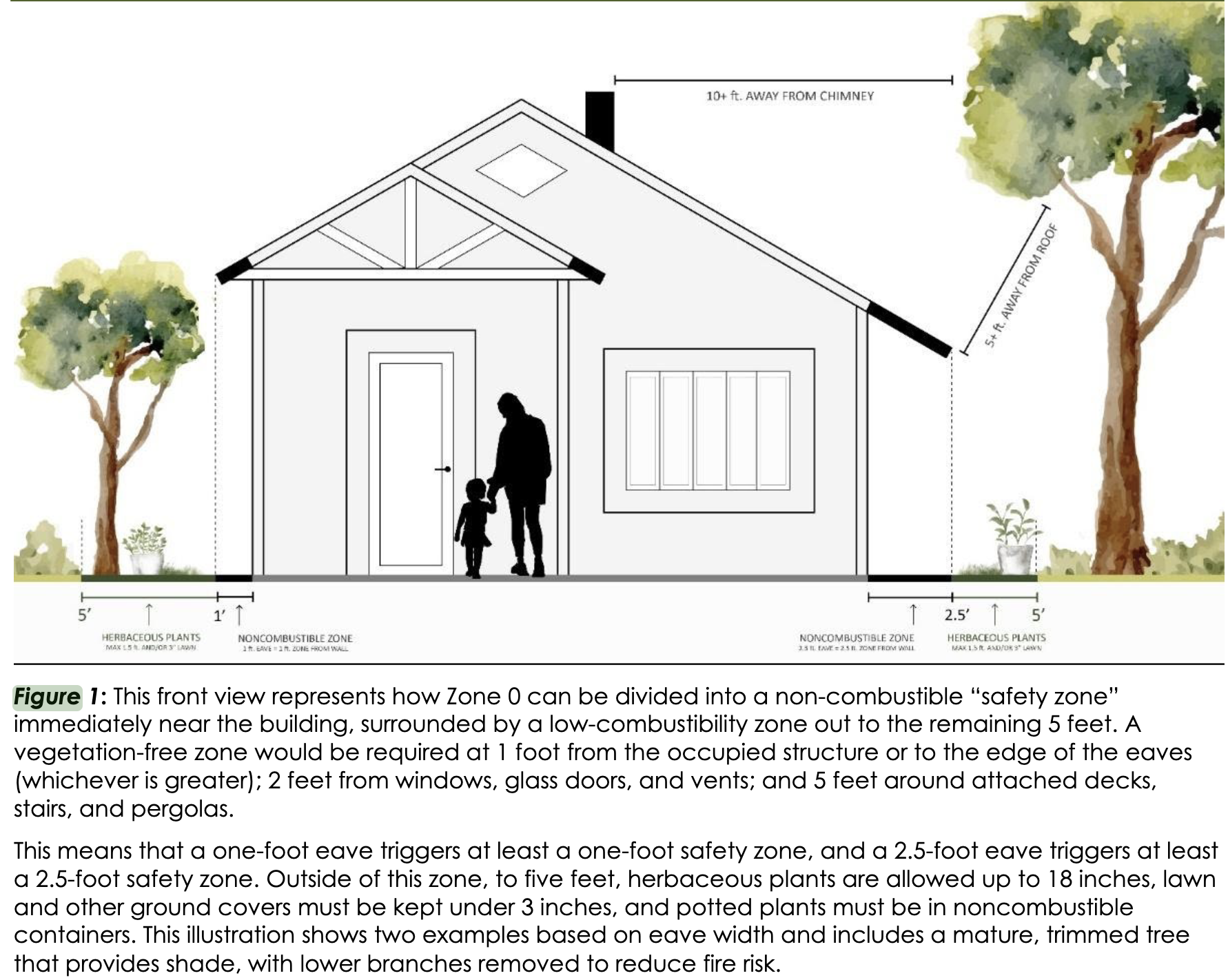
Zone Zero regulations divide the five feet next to structures into two parts: a non-combustible safety zone, which is under the eaves, and a low-combustibility zone that extends outside the eaves, so the two zones would change in size depending on the size of a structure’s eaves.
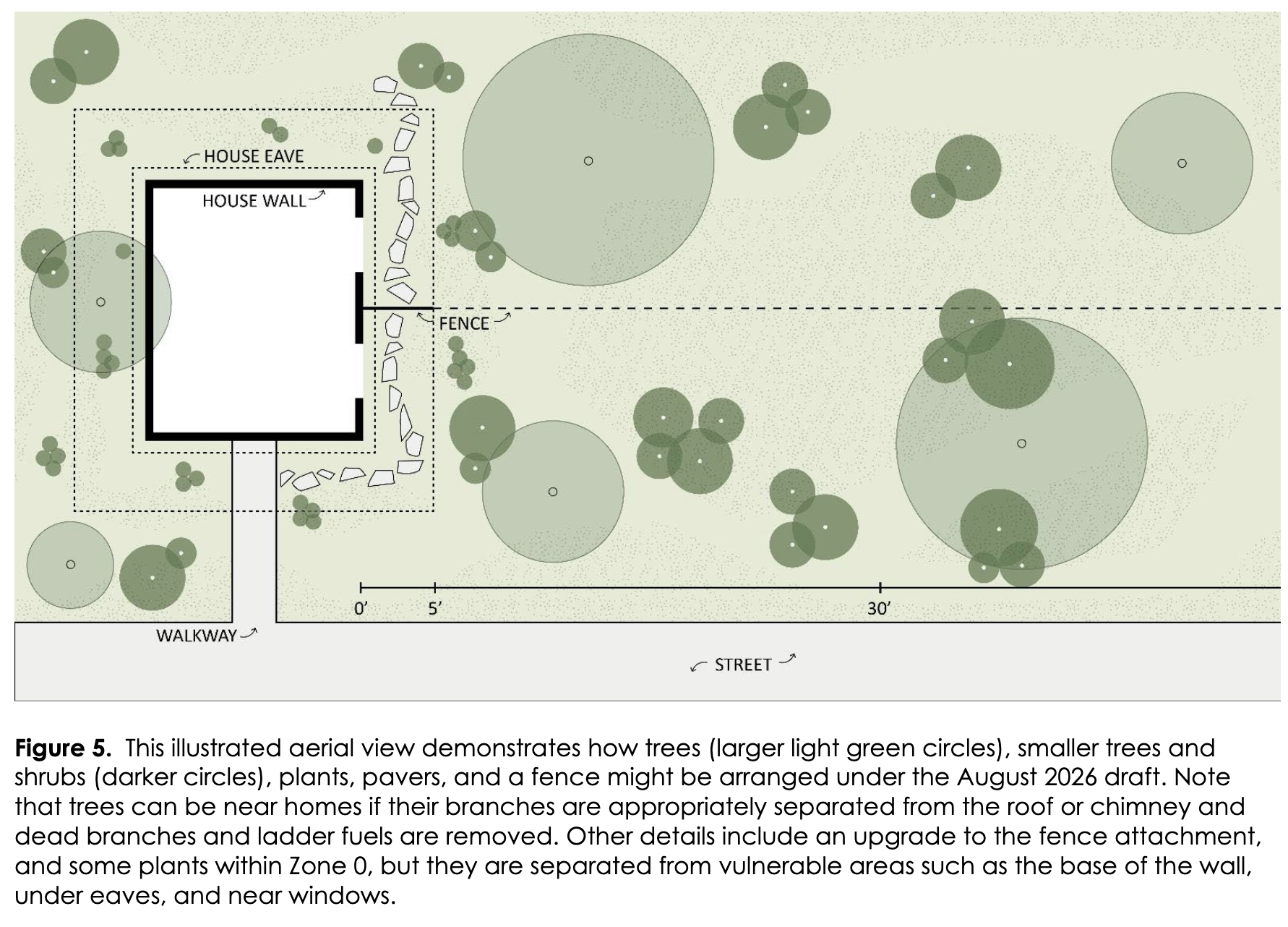
The non-combustible zone, which is a minimum of one-foot wide, would allow no vegetation and would extend a minimum of two feet around doors, windows, and vents and five feet from decks. Well-maintained plants would be allowed in the outer low-combustibility zone of Zone Zero. Allowable plants include low ground covers, potted plants that can be easily moved, non-woody smaller plants, such as bulbs, begonias, impatiens, and poppies, and grass mowed to three inches or less in height.
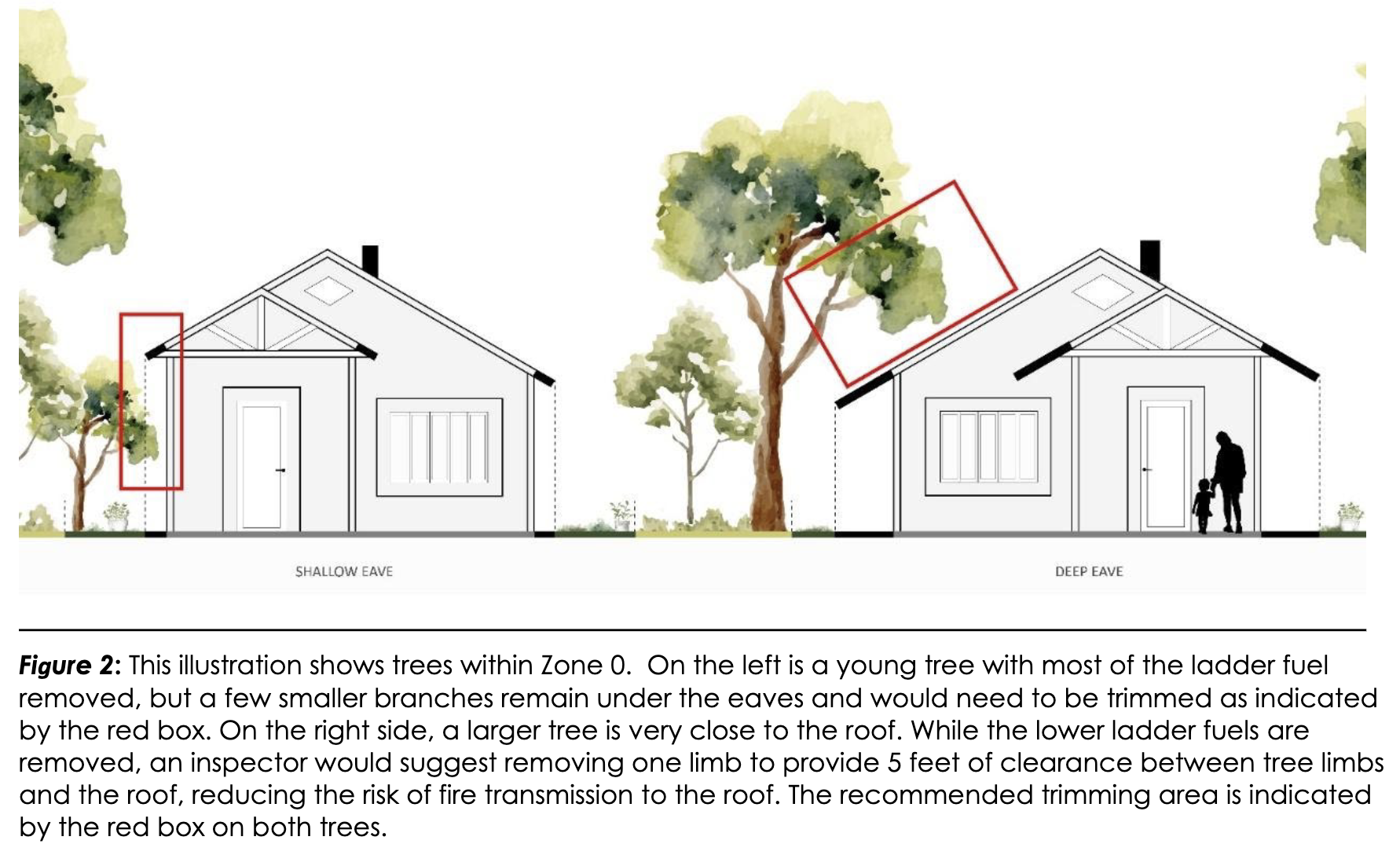
Existing trees would be permitted in Zone Zero, although branches must be 10 feet from chimneys and kept clear of eaves. Dead wood must be removed, while lower branches must be removed from the bottom six feet of large trees and the lower third of smaller trees. New trees would not be permitted in Zone Zero.
Wooden fences, sheds, and gates within Zone Zero would need to be replaced with non-combustible materials.
Some variation from the regulations can be approved by local fire agencies, based on factors such as geography/topography, fire risk, lot size, response resources, structure composition, or compliance with the Calif. Wildland Urban Interface code.
“These practices must provide substantially similar practical effects to the regulations,” according to the board’s summary. “For example, some community-specific local alternative options might include an inspector considering the use of fire-safe construction or building materials, an allowance of various vegetation types based on region, or applying logical discretion for unique architecture or design.”