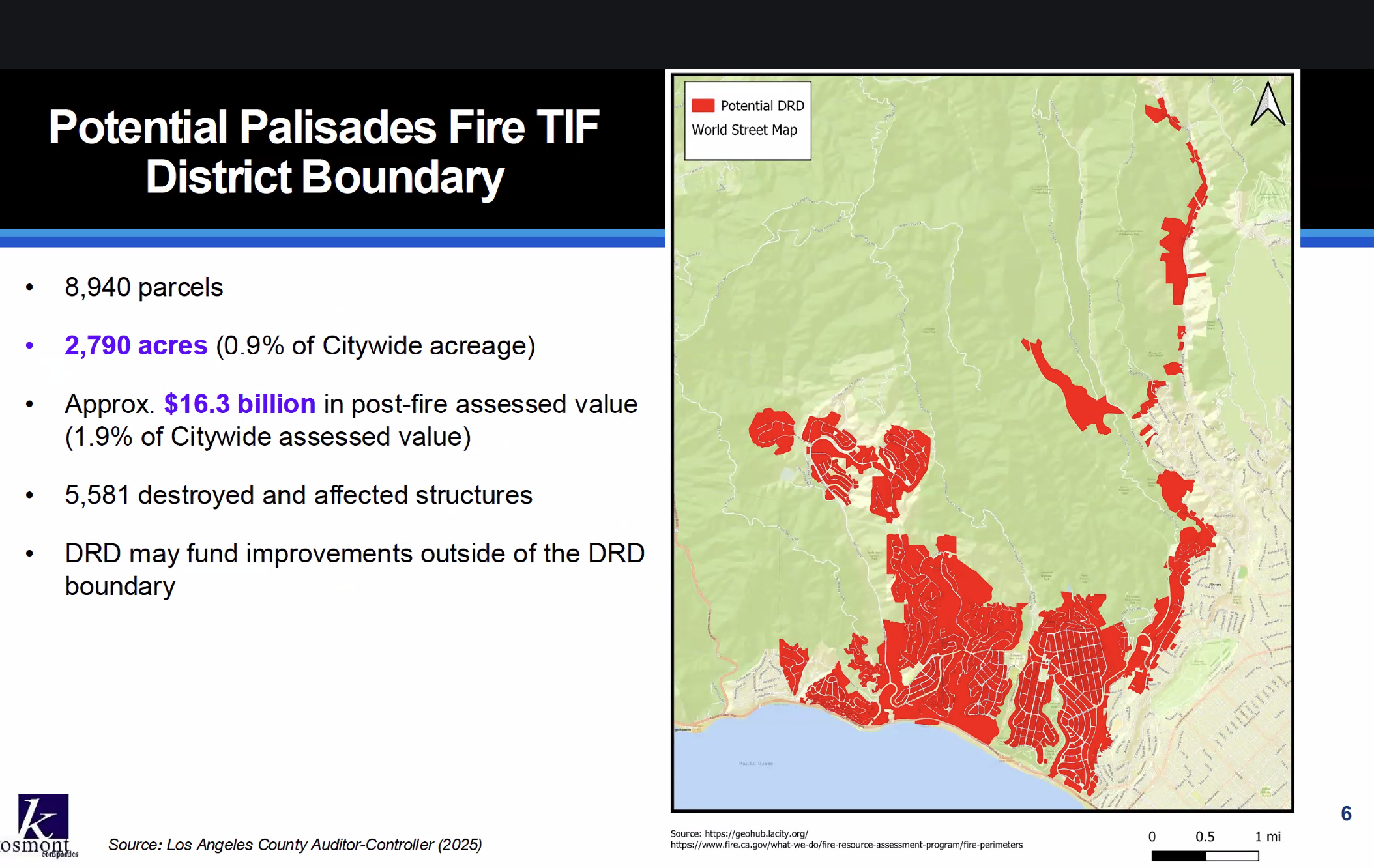
The red area includes the properties that would part of the Disaster Recovery District assessment area.
By Laurel Busby
News & Information Editor
City Councilmember Traci Park has requested support for her proposal to create a Disaster Recovery District for Pacific Palisades.
The district would use up to 50 percent of normal incremental city property tax increases that will naturally occur as property taxes rise in the Palisades burn area due to rebuilding, according to a presentation at a Oct. 29 online meeting. No new taxes would be assessed, and most of Rustic and Santa Monica Canyon’s properties would not fall into the district. (See red map above for the boundaries of the district.)
Although the district would be mostly outside the Canyon, a portion of the funds could still be used in the Canyon, such as money for infrastructure projects, according to the Thursday presentation. The district could also speed the Palisades recovery overall by providing quicker funding for needed projects and potential low-interest loans for residents who haven’t been able to access other funding to rebuild. In addition, the county is expected to double the available funds, which would bring more money to rebuilding than would otherwise be available.
To support the effort, residents can attend the city’s next Budget and Finance Committee meeting, which should be either on their normal Nov. 17 meeting date or at a yet-to-be-scheduled special meeting.
Here are two options for advocacy, and more are listed on the website pali411.com.
1. Write a position letter by Nov. 1, and submit it to the council in the comment section at this city link. See the Pacific Palisades Community Council letter and talking points for templates.
4. Attend the Budget and Finance Committee meeting, which is not yet scheduled for either 11/3 or 11/17, and voice your support for the district. (Sign up for updates through the PPCC newsletter).
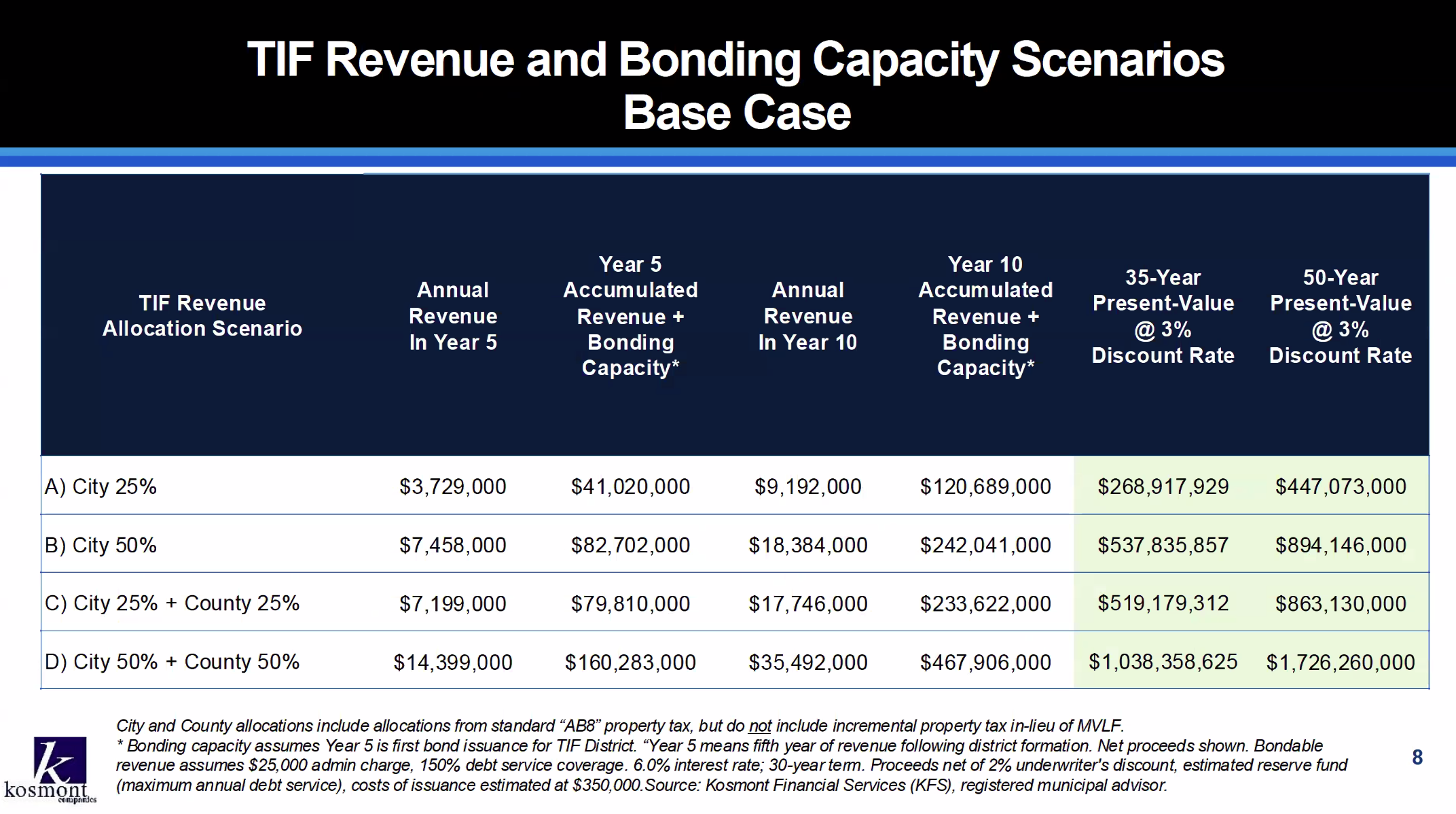
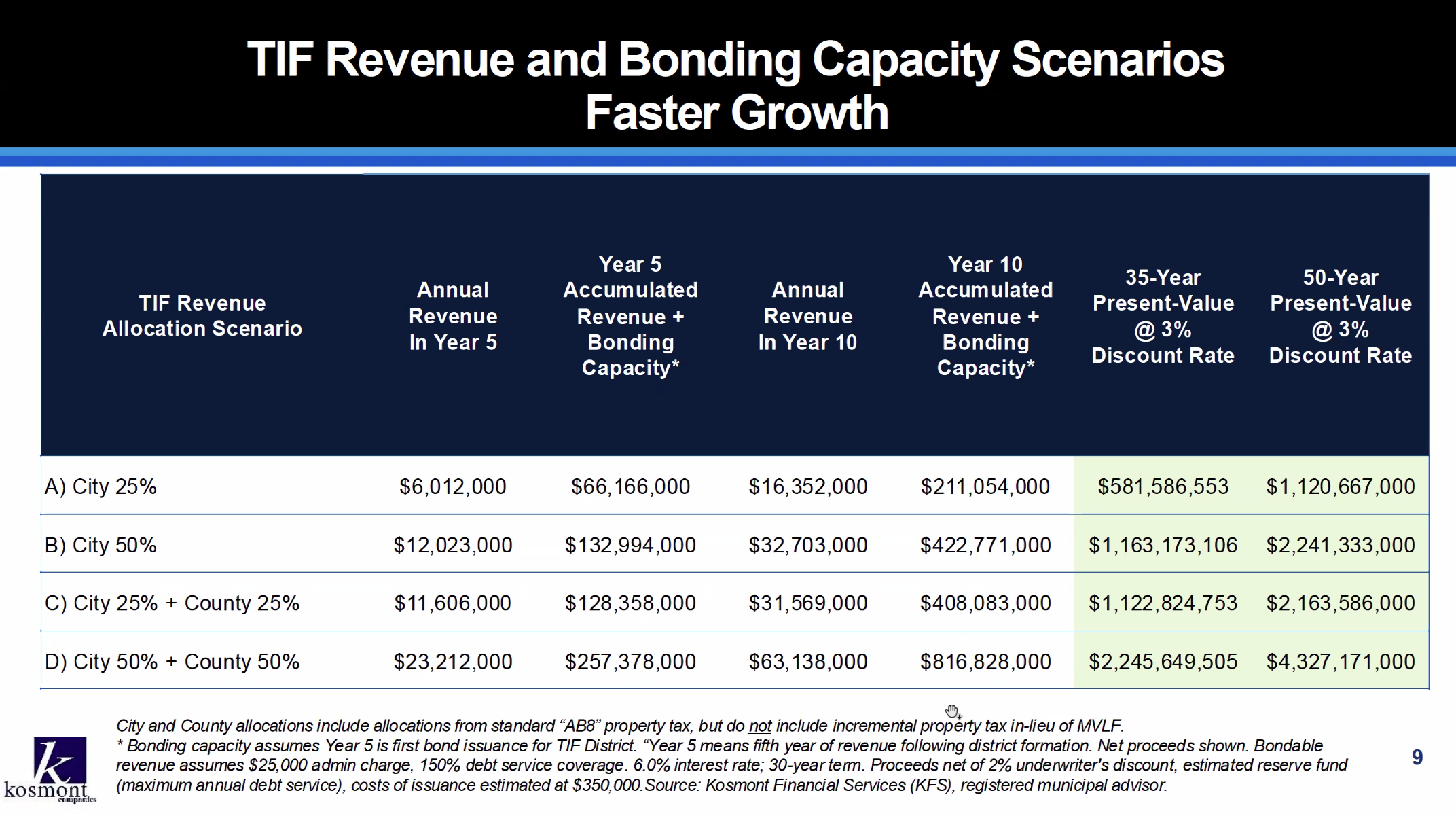
Tables with estimated funding for the district are below. The estimates are based on A) A city funding rate of 25 percent of the incremental tax increase; B) A city funding rate of 50 percent of the incremental tax; C) A funding rate that includes both the 25 percent city funding rate and a 25 percent matching tax from the county; and D) A funding rate that includes the 50 percent county funding rate and a 50 percent matching tax from the county. The first chart is a more conservative estimate, while the bottom chart assumes a faster growth rate for the tax.