
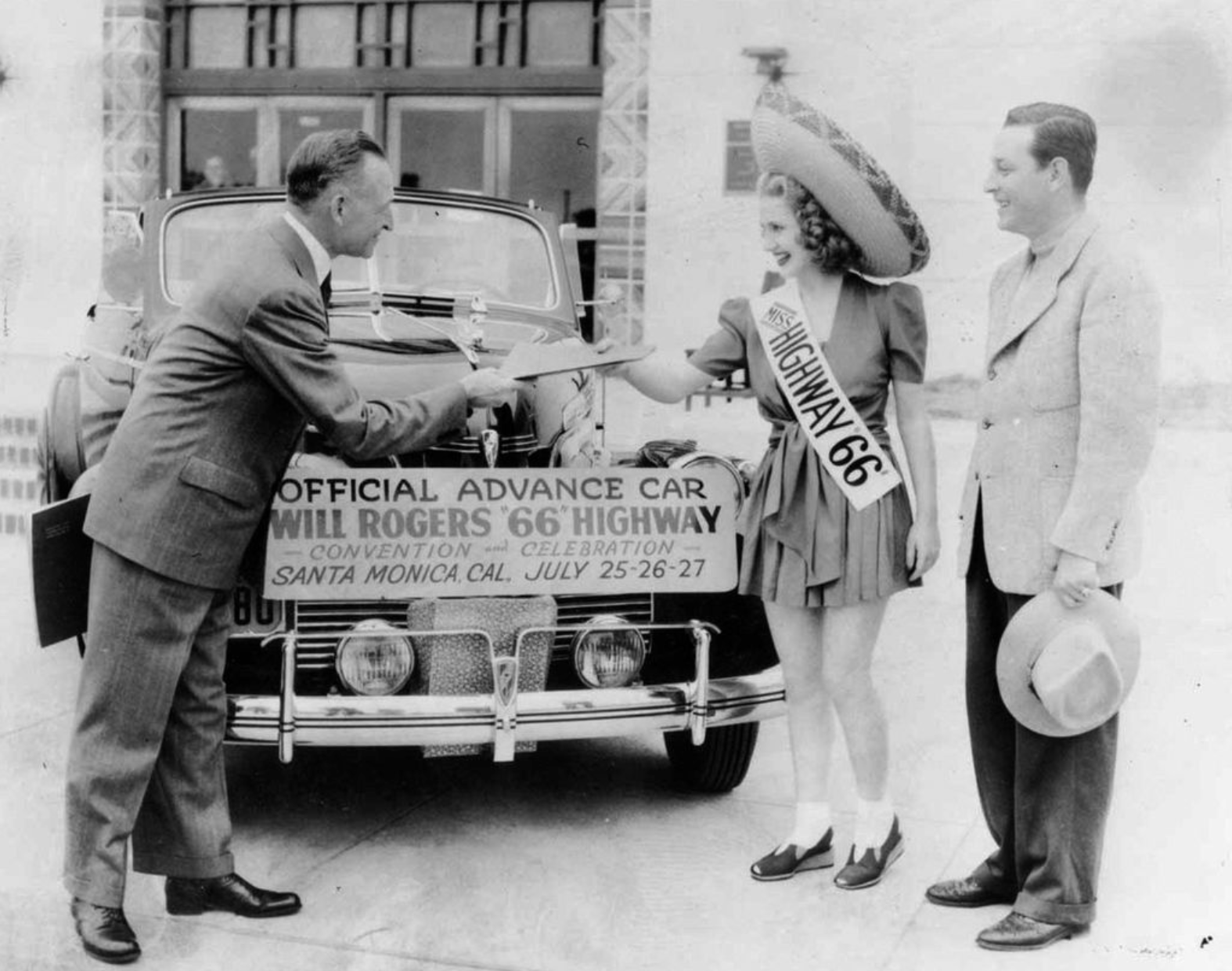
Will Rogers Highway "66" convention and celebration. Seen here is Mayor Claude Crawford, Miss Highway 66, and an unidentified man. (Credit: Ted Fach)
The Santa Monica History Museum will present Creating Route 66: Road, Legend, Community from Nov. 12 through June 27, 2027.
Co-curated by Canyon resident Anne Wallentine and Avehi Menon, the exhibition explores how the iconic highway took shape in the built landscape, the cultural imagination, and local communities—and how it continues to evolve.
“Route 66 holds a powerful place in the American imagination, but its history is also deeply personal,” said Wallentine, executive director of the Santa Monica History Museum. “By bringing together stories of migration, creativity, travel, and community, we invite visitors to consider who shaped the road, how various communities and individuals experienced it, and what continues to make it meaningful today.”
The exhibition examines the diverse experiences of people who traveled Route 66 through historic photographs and artifacts. Visitors will explore the early trails that shaped its path, its role in migration and tourism, and its enduring presence in film, literature, and music across several thematic sections:
· Building the Road: Route 66’s origins, including the early Indigenous trails that shaped the highway’s path.
· People of the Road: The experiences of Dust Bowl migrants, African American travelers navigating segregation with the help of Green Books, and women whose lives and work shaped Route 66.
· Imagining the Road: The reinvention of the Road’s lore through literature, film, and music, from John Steinbeck’s The Grapes of Wrath to Disney and Pixar’s Cars.
· Visualizing the Road: The bold, eccentric, and kitsch imagery of roadside advertising and landmarks
· The End of the Road: Route 66’s particular resonance in California and Santa Monica, the “End of the Trail”
· Sharing the Road: The communities connected by the highway and contemporary efforts to revitalize it for local businesses and travelers.
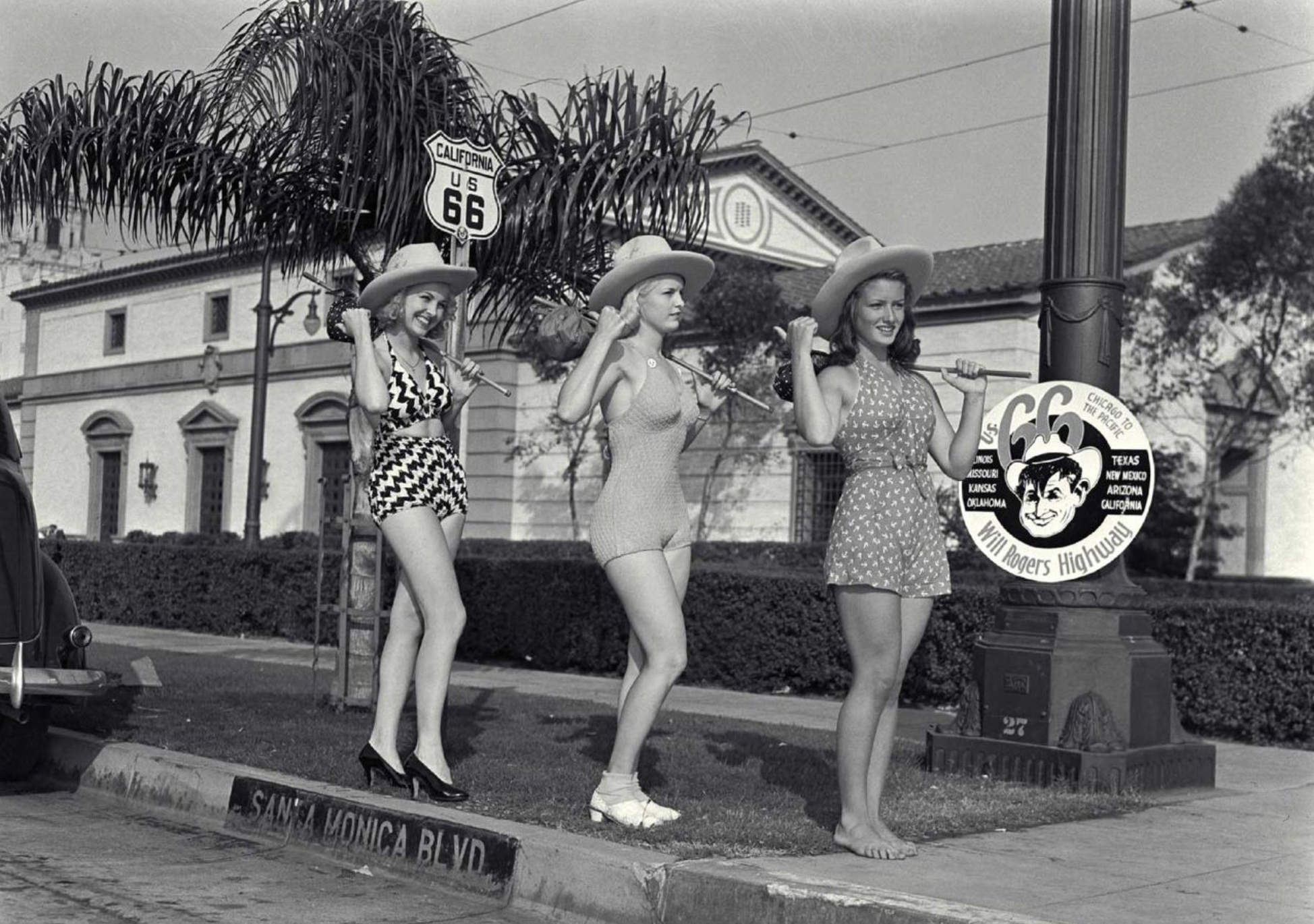
Bathing beauties pose with a sign designating Route 66, Will Rogers Memorial Highway, in Beverly Hills, August 1, 1938. Jean Myras is pictured. From the Bill Beebe Collection
Highlights of the exhibition include historic photographs of Route 66, a first edition of The Grapes of Wrath, loans from the California Historic Route 66 Association, and images of iconic roadside signage. An interactive feature will invite visitors to mark their own journeys along the route, adding their experiences to its continuing story.
Public programs are planned for 2027 and will include talks on the Green Book and Route 66 travel stories, a screening of the documentary Route 66: The Untold Story of Women on the Mother Road by Assertion Films, and family Hands-on History workshops with craft projects that relate to the road’s history. Dates and registration details will be announced at https://santamonicahistory.org/events/.
About the Santa Monica History Museum
The Santa Monica History Museum preserves and shares the diverse history of the Santa Monica Bay Area through exhibitions, archives, and public programs. The museum stewards extensive collections that document the city’s cultural, civic, and social history, including more than 600,000 photographs. Centrally located downtown next to the Santa Monica Public Library’s Main Branch, the museum serves as a community resource for research, education, and public engagement, connecting residents, scholars, and visitors with Santa Monica’s past and present.
Visitor Information
Creating Route 66: Road, Legend, Community
Nov. 13, 2026–June 27, 2027
Santa Monica History Museum
1350 7th Street, Santa Monica, CA 90402
Hours: Thursdays 2-5pm, Fridays-Sundays 11-5pm.
Admission: $8 for adults, $5 for students and seniors. Free to museum members, children 4 and under, active military/veterans, and SNAP/EBT cardholders. Free to all the first Sunday of each month.
(The above is from the museum press release about the event.)
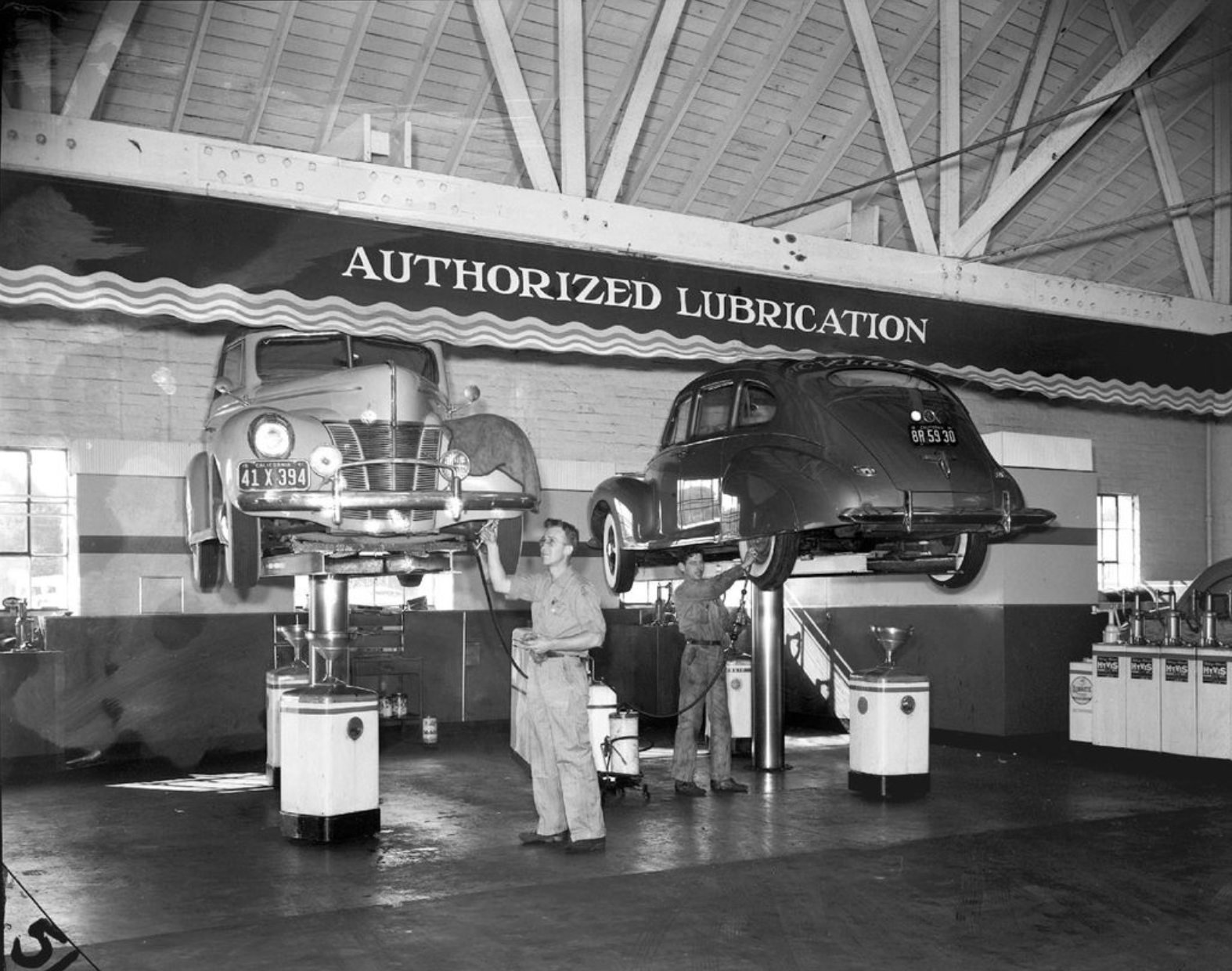
Two mechanics work on automobiles on lifts in the service department of La Monica Motors, 209 Colorado Avenue. From the Bill Beebe Collection.
