
Jack Boul’s “Intimate Expressions” Opens at Gallery 169 on Oct. 3
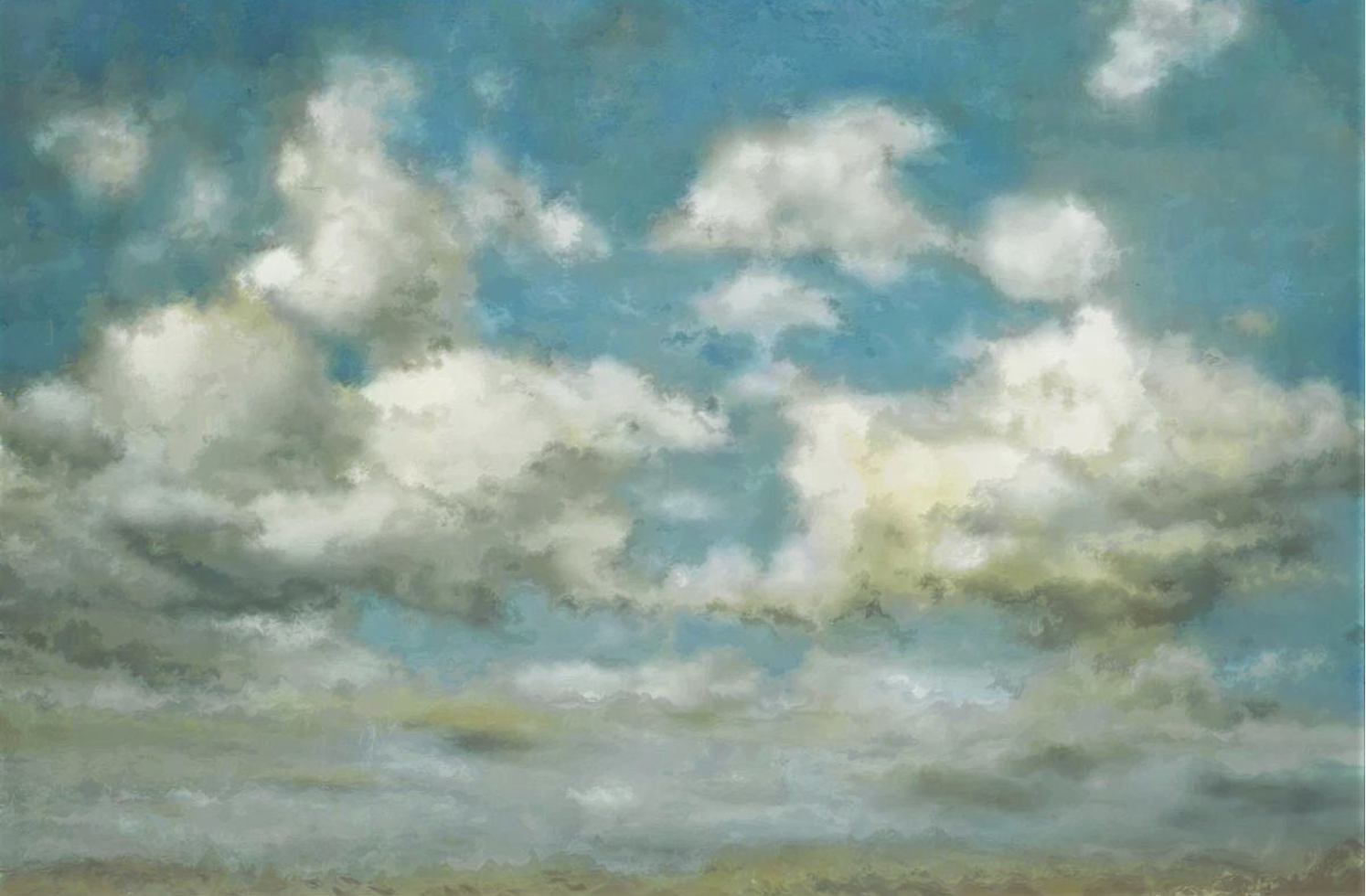
Clouds by Jack Boul
By Laurel Busby
News & Information Editor
Jack Boul preferred to paint small.
The prolific painter, whose work is featured at the Smithsonian and the National Gallery of Art, created pieces that were about the size of a coffee table book, according to his son, David Boul.
“He wanted you to have an intimate relationship with the painting,” said the younger Boul, a 26-year Canyon resident. “He wanted you to get up close…. If you paint a big, giant, splashy painting, that's a completely different feel than a Jack Boul painting…. My father's work is poetic. It's gentle.”
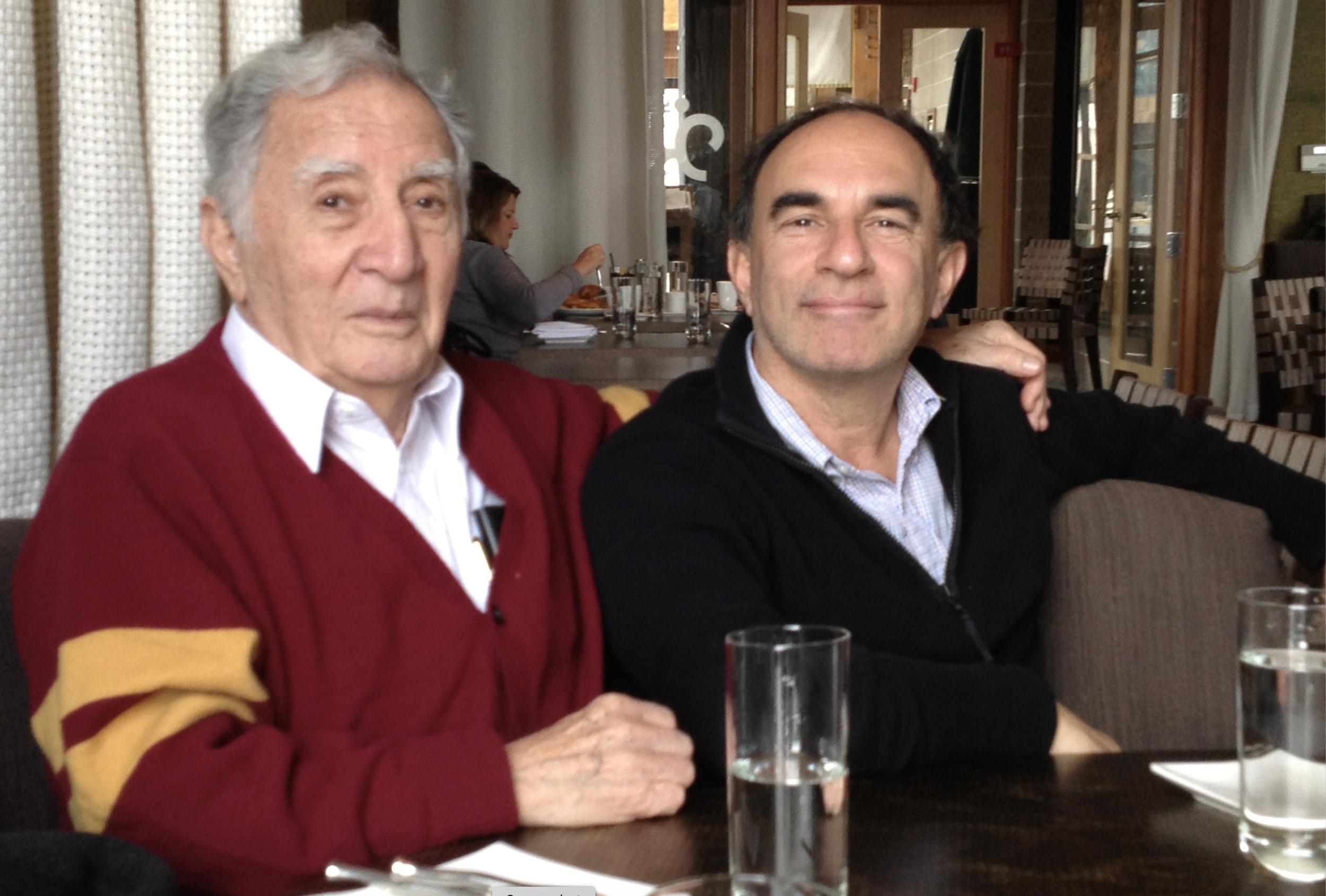
Artist Jack Boul with his son, David.
About 60 of his father’s paintings and monoprints will be displayed at Gallery 169 as part of the exhibit, “Intimate Expressions,” which will have its opening reception on Oct. 3 from 5-8 p.m. at 169 W. Channel Rd. The varied artworks will include landscapes, seascapes, and portraiture to give viewers a taste of his catalog.
Since his father’s death about 18 months ago at 97 years old, David has devoted substantial time to sharing insights into his father’s work, which is well known in the Washington DC area where the painter was a professor at American University for decades. David has arranged talks at several universities, including an upcoming Oct. 7 presentation at UCLA.
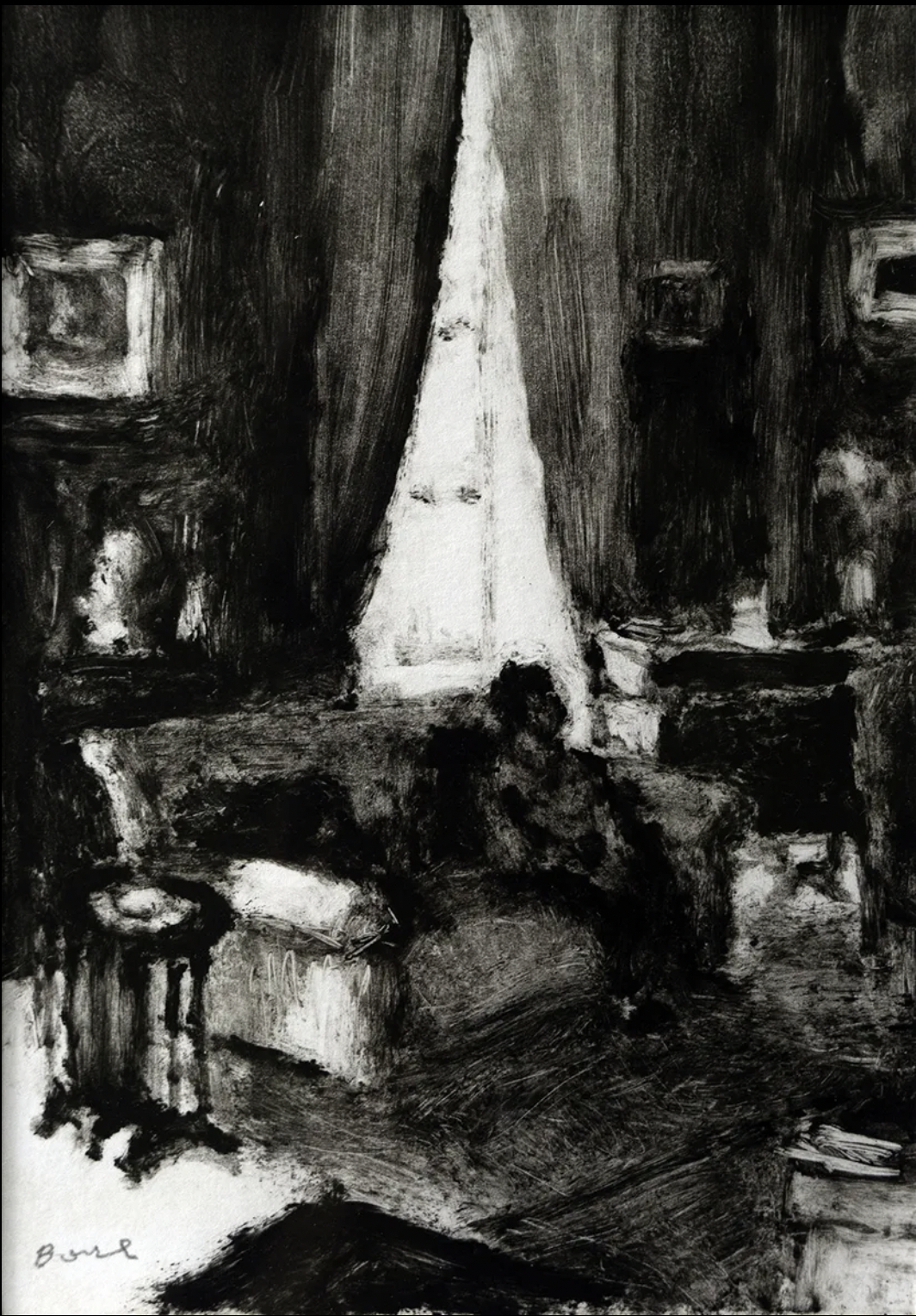
A Jack Boul monotype
In addition to oil paintings, Jack also enjoyed creating monoprints, which were painted on a metal plate and then pressed onto paper for a single print.
“You have to paint backwards,” David said. “One curator at the National Gallery said, ‘It’s a very easy thing to do. It’s a hard thing to do well.’”
Jack, however, did them well. Since boyhood, he worked on his art, so that when people asked him how long it took to paint a picture, he might answer, “90 years,” because the accumulation of knowledge over the decades informed his creation of each new piece.
Some subjects intrigued him for years, such as fields of cows—Holsteins in particular—due to the geometry of their black spots. His wife of 72 years, Vivian, who he met while working together at a summer camp in upstate New York, was his muse andcan be seen in numerous pictures, although always in a way that wouldn’t be recognizable, even to most people who knew her. She would simply be a woman at a café or the beach who might remind the viewer of a special woman in their own lives.
“That’s the same thing with everything he painted,” David said. “He didn't want to influence what you thought about it and that's why his work is timeless. There wouldn't be any identifying objects. It would be the ocean and the beach and some figures who are swimming, but they could have been swimming in 1910 or they could have been swimming last year.”
After a childhood in the South Bronx, Jack spent much of his life as a professor in Washington, D.C., where David and his partner, Tom O’Briant, still spend half the year. Teaching was a beloved part of his father’s life, and even after retiring from American University, Jack taught at the Studio School, which he co-founded.
Jack’s students treasured his insights into their work, and several will be attending the Gallery 169 opening. They also enjoyed being around him.
“My dad was just a genius and a sweetheart,” David said. “He was a great teacher because he was very truthful. If something was good, he would tell you. If it needed work, he would tell you. My mother [who taught psychology at Catholic University] used to say teaching is the best occupation in the world. Doesn't matter if you're teaching English or swimming or art or music or algebra…. Passing down knowledge is a wonderful thing, and I know that was very important to him.”
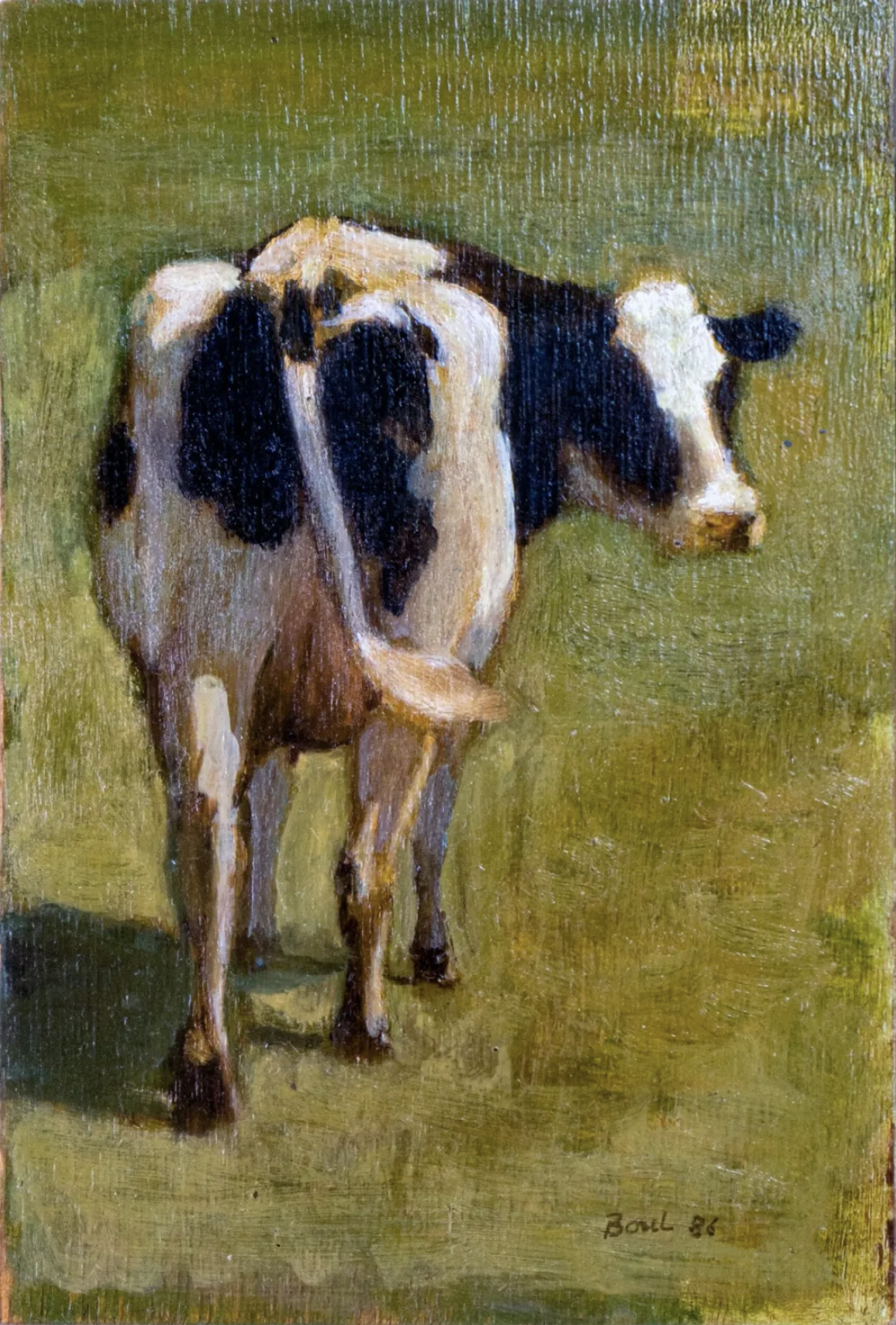
A Jack Boul Holstein painting
Many of his students delighted in his teachings, and a number have become successful artists themselves. David regularly attends their shows, and he also continues to enjoy his father’s artwork, because even paintings that he’s looked at for years invariably offer new things to observe.
In his father’s opinion, one way that people can differentiate art from decoration is how people can continue to be drawn to it for extensive periods of time.
“A piece of art is something that can hold your interest for a long time,” David said. “All of his paintings are deep. You can look at my father’s paintings for years and years and years and still see something new. …. They’re all special. He didn’t sign his name on it until he was satisfied that it was outstanding.”
California also was a special location to him, and he visited David and Tom frequently, which inspired his painting. However, because his career was focused in D.C., the California art community hasn’t been exposed to much of his work.
For David, sharing his father’s legacy with Californians and with a new generation through art shows and the college talks, which will include presentations at UC Irvine, UC Santa Cruz, and George Mason University this fall, offers a way to expose new people to his father’s life, thoughts, and work.
“I wish he’d been alive to see this [Gallery 169] show,” David said. “I miss him. I know it would have been a real thrill for him to see his work on the walls in Santa Monica Canyon.”
After the reception, “Intimate Expressions” will be on display by appointment until the end of November. Visit gallery169.com or call (310) 963 3891 for further information.
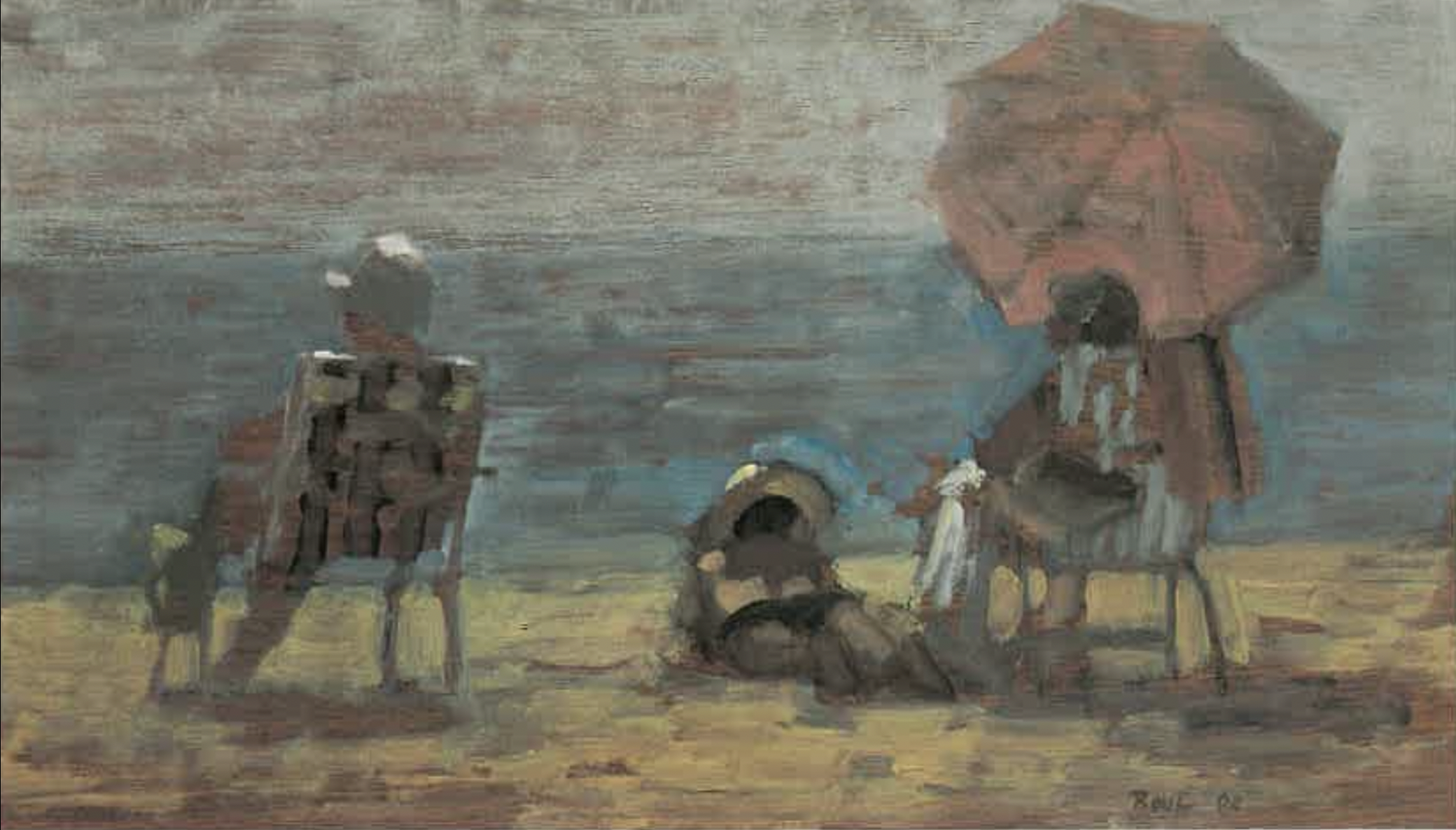
A beach scene painted by Jack Boul
