Resilient Palisades Wins Grant to Fight Invasive Plant Species
By Laurel Busby
News & Information Editor
Invasive plants can cause economic, public health, and environmental harm, according to a webinar conducted by Jordan Corral and Sara Marti of Resilient Palisades last week.
To combat the problem, RP has been recruiting volunteers to help with its Removal of Invasive Plants program, which recently received a $24,000 grant from UCLA’s Philanthropy as Civic Engagement initiative. Thus far, about 80 people have volunteered to aid the effort, which will feature regular events to dig out problematic plants in the Palisades. Interested residents can join the endeavor via this link.
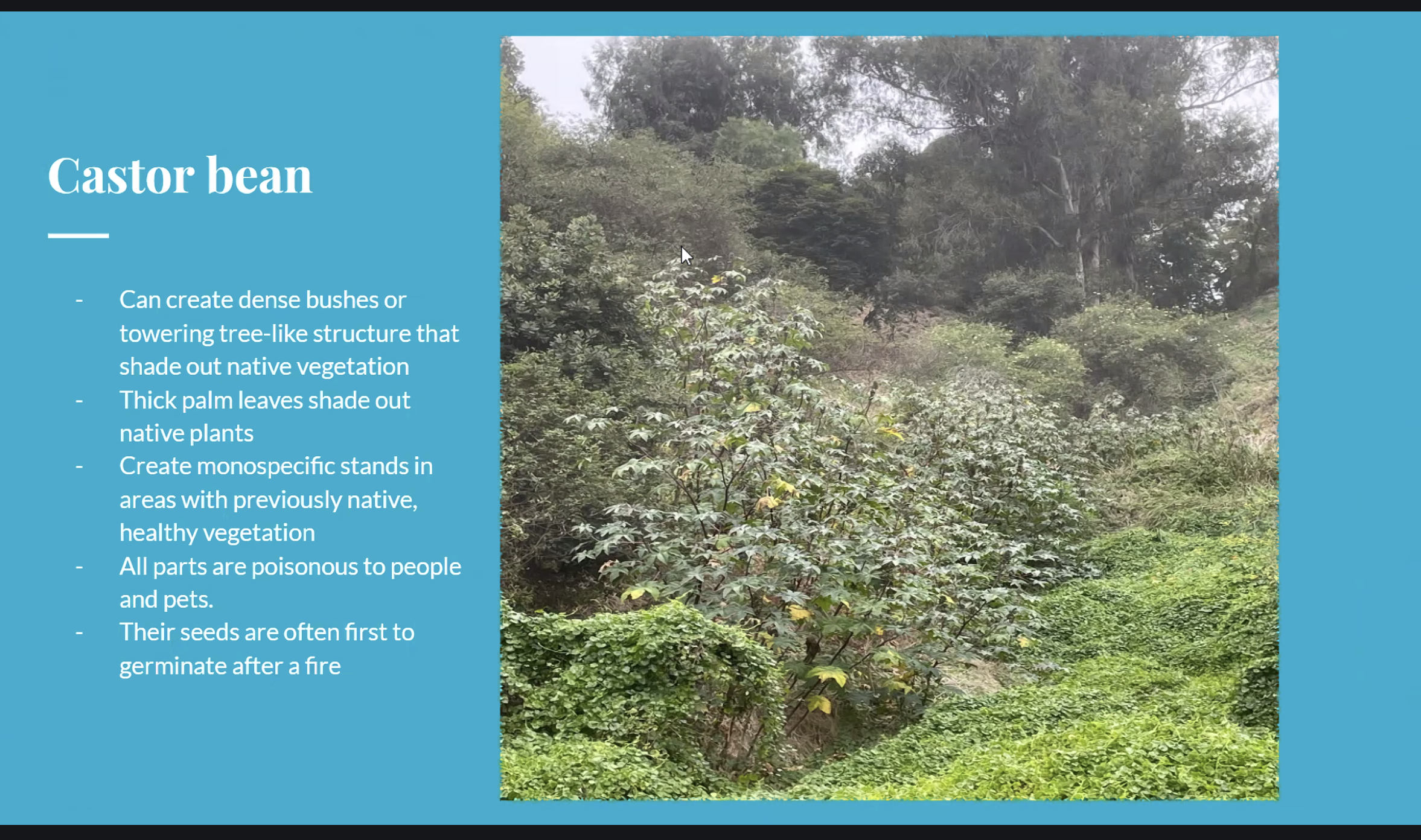
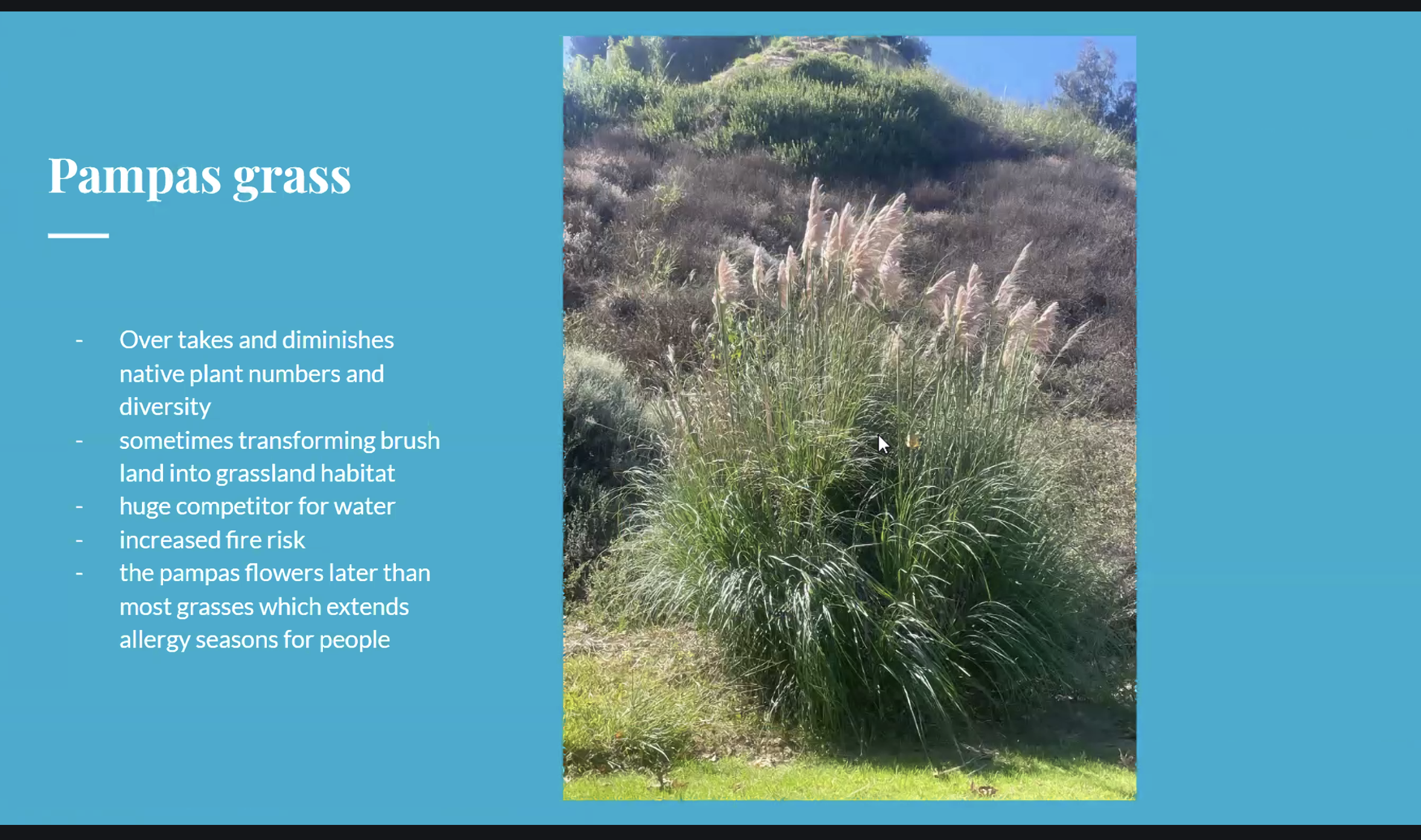
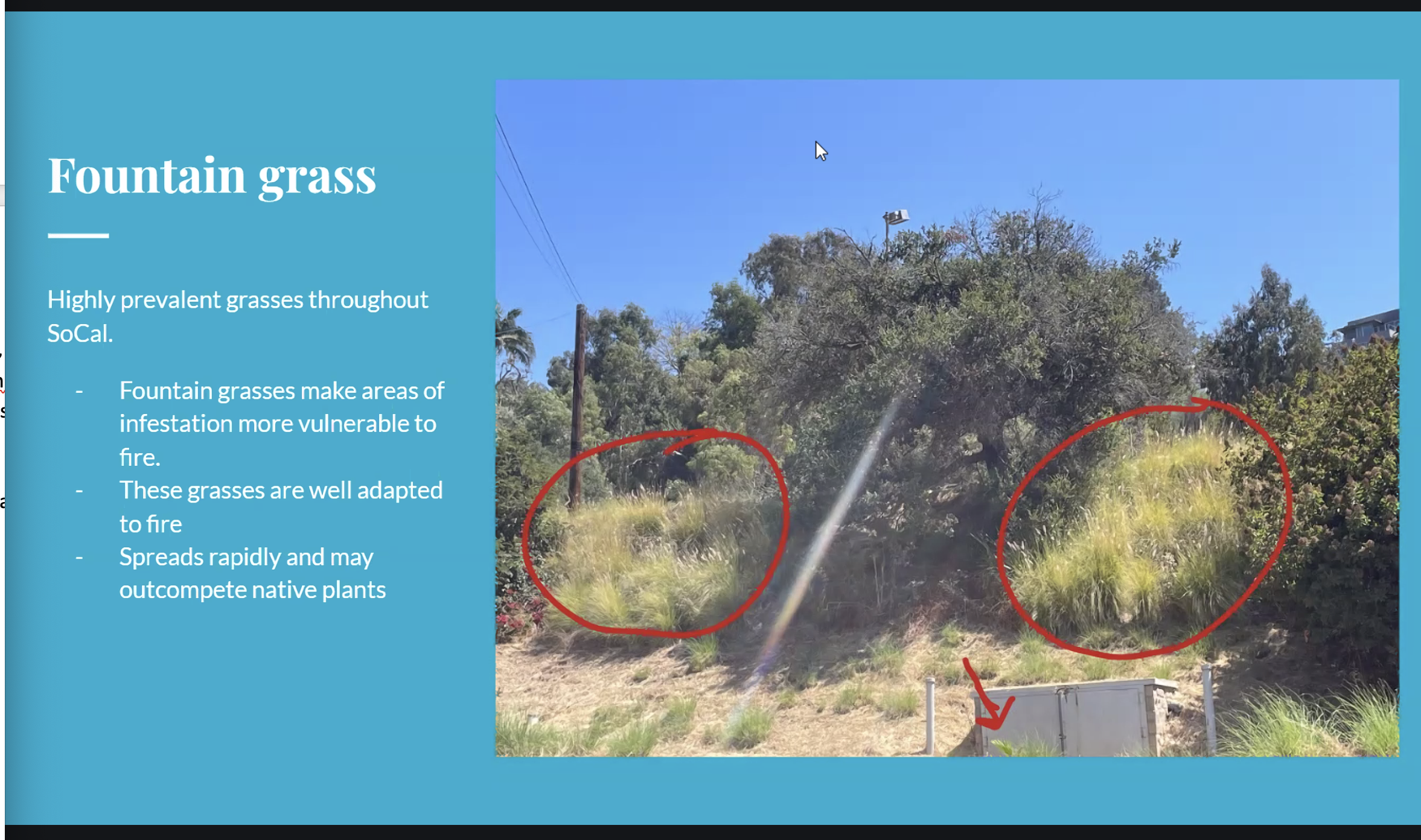
In the webinar, Corral detailed problems with specific invasive nonnative plants that have displaced native plants in areas of Pacific Palisades, such as Temescal Canyon. In particular, he pointed out issues with castor bean, Cape ivy, Canary palm, fennel, fountain grass, pampas grass, and giant reed.
For example, he said Canary palm can form dense canopies of thirsty plants that compete for water with native plants. The plants also shed large amounts of leaf litter that can provide fuel for forest fires.
Many of the other invasive species cause similar issues, but some also have additional problematic characteristics. For example, castor bean is poisonous to both people and pets, while also having seeds that can be some of the first to germinate after fires, Corral said. In addition, its roots emit a compound that changes the soil chemistry, which reduces the ability of native plants to grow in the same area.
Fennel can also reduce an area’s biodiversity in part because it alters the composition and structure of plant communities in its vicinity, Corral said. Fountain grass is one of the invasive plants that can form “fire ladders,” which wildfires can climb to quickly expand into new areas.
When invasive plants are removed and native plants are allowed to thrive, the landscape becomes not only less problematic during wildfires, but also more resplendent with biodiversity, Corral said. Westwood Greenway (2657 Overland Ave.) is an area that has been rehabilitated with native plants and provides an example of the beauty that such landscaping can create.
“We want more balance; we want more native plants,” Corral said, noting that PaliHi students had joined together on Bowdoin recently to remove invasive species. “Every little bit you can do matters.”
The Removal of Invasive Plants program has the following short- and long-term goals:
1) Meet several times a month at a designated location to remove invasive plants;
2) Prevent further spreading of specific invasive species in Temescal Canyon;
3) Replace invasive plants with native plants alongside schools, sidewalks, homes, and businesses;
4) Remove pampas grasses from Temescal Canyon;
5) Remove Giant Reed (Arundo Donax) at various locations along the Pacific Coast Highway;
6) Continue partnering with local schools, Palisadians, park services, and grassroot organizations.
More information about RP is available at https://www.resilientpalisades.org. Below are a sampling of slides from the Apr. 26 webinar.