California Forestry Board Committee Revises Proposed Zone Zero Rules
By Laurel Busby
News & Information Editor
Due to public feedback, a California' Board of Forestry and Fire Protection committee has substantially revised its draft Zone Zero proposal for handling plants and other material within five feet of structures in high fire severity areas.
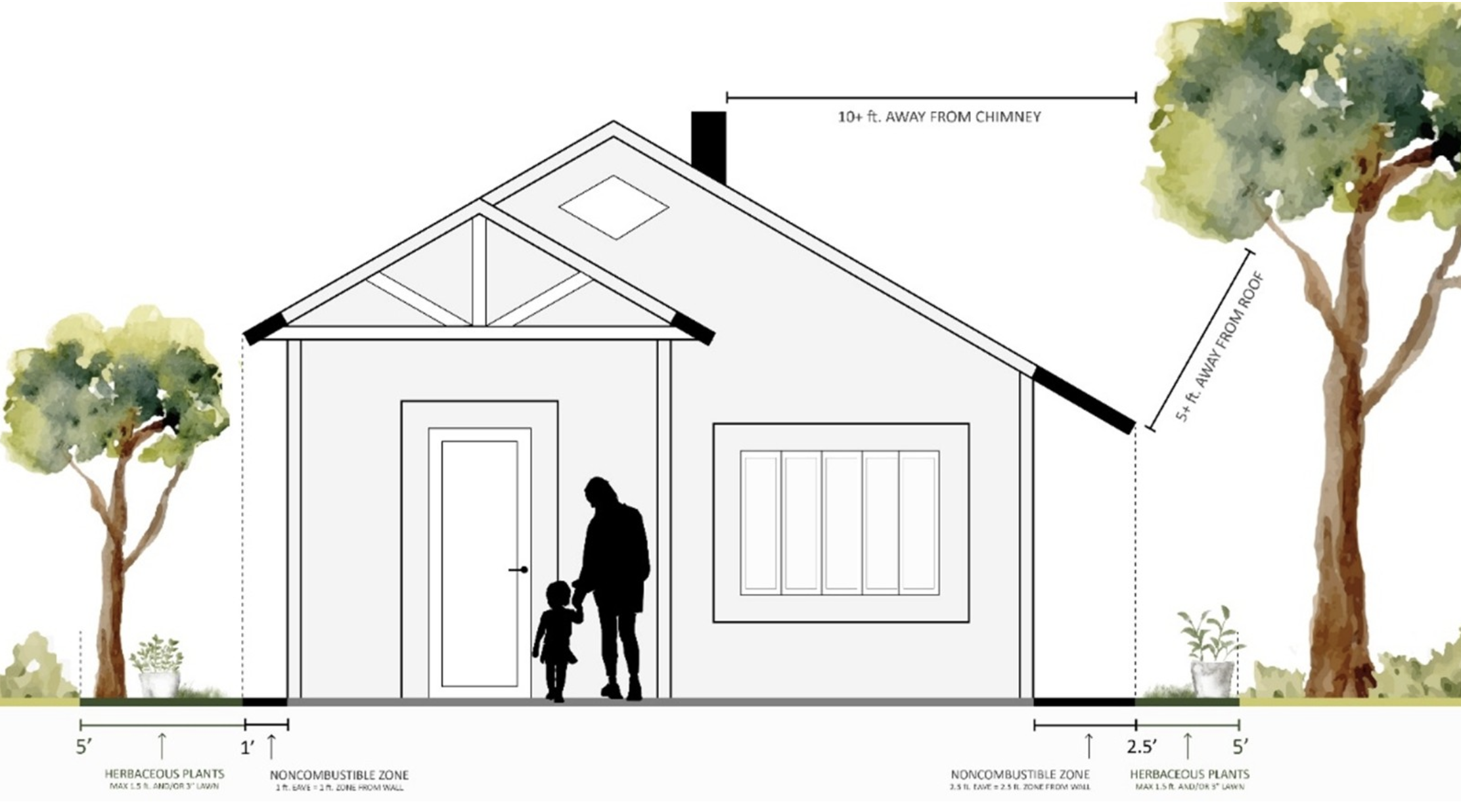
According to the board’s Zone 0 Regulatory Advisory Committee’s press release, the revised proposal for Zone Zero regulations offers a phased-in implementation over five years that breaks Zone Zero into a “non-combustible immediate safety zone” that is at least one foot from homes and a “low-combustibility zone” that allows more flexibility within the remaining five feet of Zone Zero.
“While Zone 0 requirements will apply to new construction upon adoption of the regulation, existing homes and structures can implement actions in phases over time within different areas of Zone 0,” the press release said.
The new draft proposal includes an “under-eave safety zone” that is at minimum one feet wide, but could be larger depending on the width of a structure’s eaves, according to the press release. Homes with two-foot eaves would have a two-foot zone where combustible material is forbidden, while all homes would have at least a one-foot safety zone, even if no eaves are present.
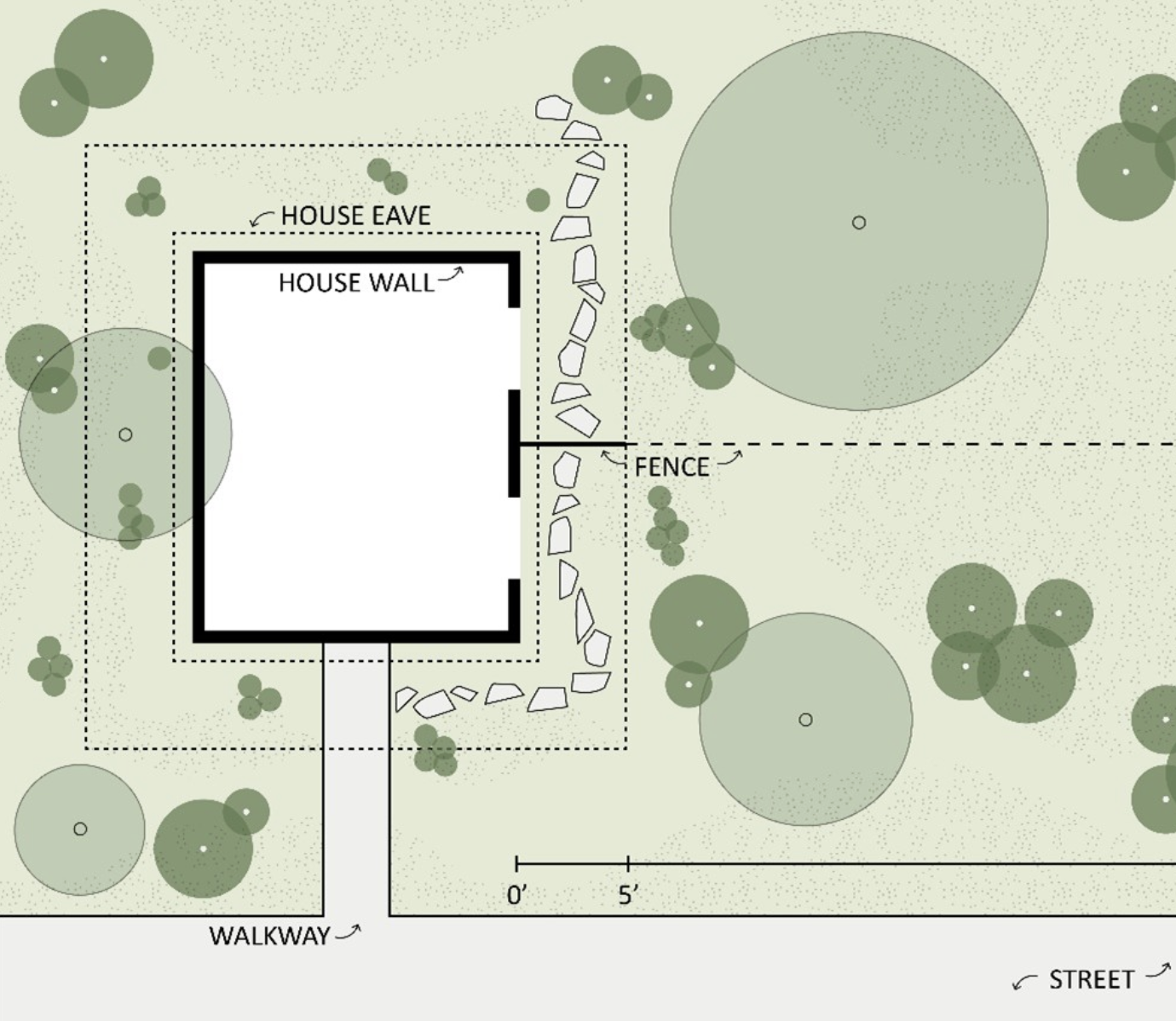
“This nested approach is designed to protect the most vulnerable parts of a structure—such as the base of the wall, windows, decks, and eaves—while still allowing for flexibility based on the attributes of the home or structure,” according to the press release.
A vegetation-free buffer would also be required within two feet of windows, doors, and vents as well as within five feet of decks and “similiar features,” according to the press release. No mulch, dead leaves, wood chips, firewood, or dying vegetation would be allowed within five feet of structures.
Outside of the safety-zone buffer, well-maintained herbaceous plants and flowers would be allowed within five feet of structures with the following conditions:
o Smaller non-woody plants, such as bulbs, poppies, petunias, and succulents are allowed in spaced groupings;
o Low ground covers, such as moss, beach strawberries, and creeping thyme are allowed per requirements;
o Grass or lawn is allowed but must be maintained per requirements;
o Potted plants in easily movable non-combustible containers are allowed.
In addition, trees would be allowed within Zone Zero, but branches must be 10 feet from chimneys and trimmed five feet above roofs, according to the draft proposal. In addition, branches would not be allowed under eaves. Dead limbs must be removed and limbs would be removed from the bottom six feet of large trees or from the lower third of smaller trees.
A five-foot non-combustible section is also required for fences that attach to homes. For example, if a homeowner already has a wooden gate within five of their home, they would have five years to replace it with a gate made of non-combustible material. Sheds and outbuildings must also have non-combustible roofs and walls.
The new rules provide some flexibility for local communities to use alternative approaches that offer equivalent or more stringent fire safety standards, according to the draft proposal.
“This isn’t a one-size-fits-all approach,” Board Chair Terry O’Brien said in the press release. “We’re building in flexibility so local experts can tailor solutions unique to their individual communities while maintaining meaningful fire safety standards.”
The proposed timeline for implementing the regulations is as follows:
● PHASE 1 (Implemented within the first 3 years): Includes removing combustible items such as firewood, dead leaves and branches, mulch, and wood chips within 5 feet of the structure. Cleaning gutters, removing dead and dying plants, trimming trees according to regulations, and implementing or adjusting for allowable vegetation during this time period.
● PHASE 2 (Implemented within 5 years, with the exact timeline to be decided by local jurisdictions): Local jurisdictions will assign a timeline, within 5 years of the effective date of the regulations, for the creation of an under-eave safety zone, replacing combustible gates, and making any necessary adjustments to sheds and fencing.
The proposed regulations would apply to homes in the State Responsibility Area (SRA) and Very High Fire Hazard Severity Zones in Local Responsibility Areas (LRA).
Before the rules can be enacted, the Zone 0 committee must first forward its draft proposal to the full Board of Forestry and Fire Protection for consideration and approval.
Further information about the proposed Zone Zero rules can be found below:
● READ: The Summary Sheet and draft rule plead for more information, including example images.
● WATCH: This explainer video about what this means in more detail.