
Canyon Resident Creates Coastal Alliance to Safeguard State Coastline
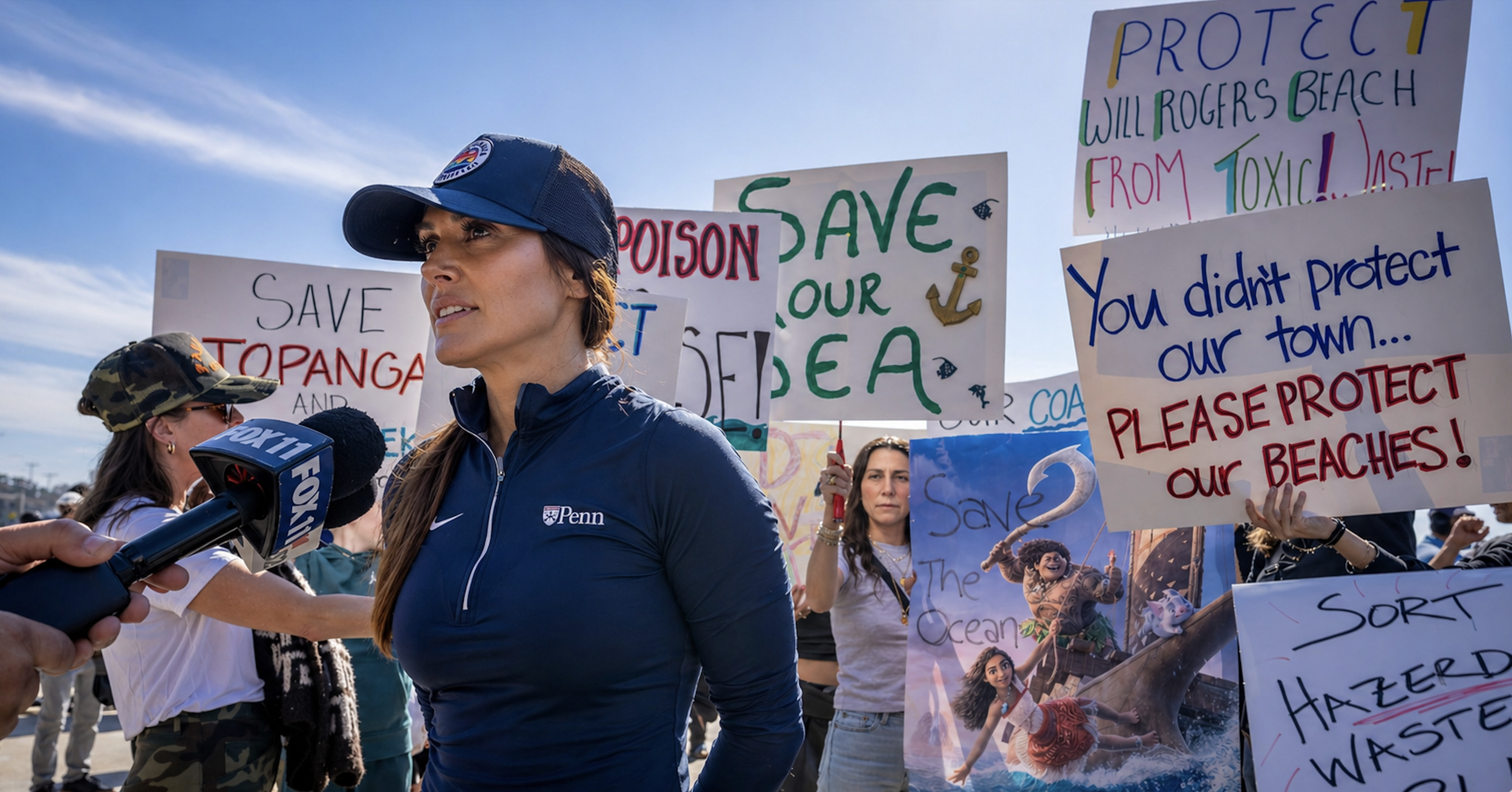
Ashley Oelsen at a protest to protect Will Rogers State Beach.
By Laurel Busby
News & Information Editor
After the Palisades Fire last year, conservation biologist Ashley Oelsen returned to her home near the base of Chatauqua and began collecting daily sand samples from Will Rogers State Beach.
“This was before anyone else began testing,” said Oelsen, who found ash and other refuse from the fire on the beach. “I spent $10,000 on testing six samples for heavy metals to understand what was going on because there was very little information.”
Oelsen, who is a former directorate fellow for U.S. Fish and Wildlife, found arsenic, lead, beryllium, and other heavy metals in her post-fire sample at the base of Santa Monica Canyon at the storm drain, while neither arsenic, lead, nor beryllium were detected in her pre-fire sample at the same location. Other toxic substances, such as dioxin and asbestos, were not present in the samples. She later learned from Lahaina fire researchers that dioxin and asbestos had most likely burned off due to the extreme heat of the fire.
In the ensuing months, testing by varied government departments and local organizations also showed heightened levels of arsenic and lead in the environment, but the officials had no pre-fire sand samples to compare with those test results. Some officials argued that the arsenic discovered through the testing might have already been present in the environment, perhaps as a result of previous pollution, such as car exhaust, and thus similar to the pre-fire levels.
However, Oelsen, who moved to the Canyon in 2018, did have pre-fire sand due to her habit of collecting and rehoming sand toys abandoned at the beach. The sand left inside those toys before Jan. 7 provided her pre-fire sample, and this sample contained much lower levels of heavy metals than her post-fire sample.
For example, her pre-fire sample had no detectable levels of arsenic, beryllium, or lead, although it showed a 3.5 parts per million (ppm) level of chromium. About five weeks after the fire, on Feb. 14, 2025, all four heavy metals were present (19 ppm of arsenic, 9.9 ppm of beryllium, and 29 ppm of lead), while the level of chromium had risen 1,500 percent to 53 ppm.
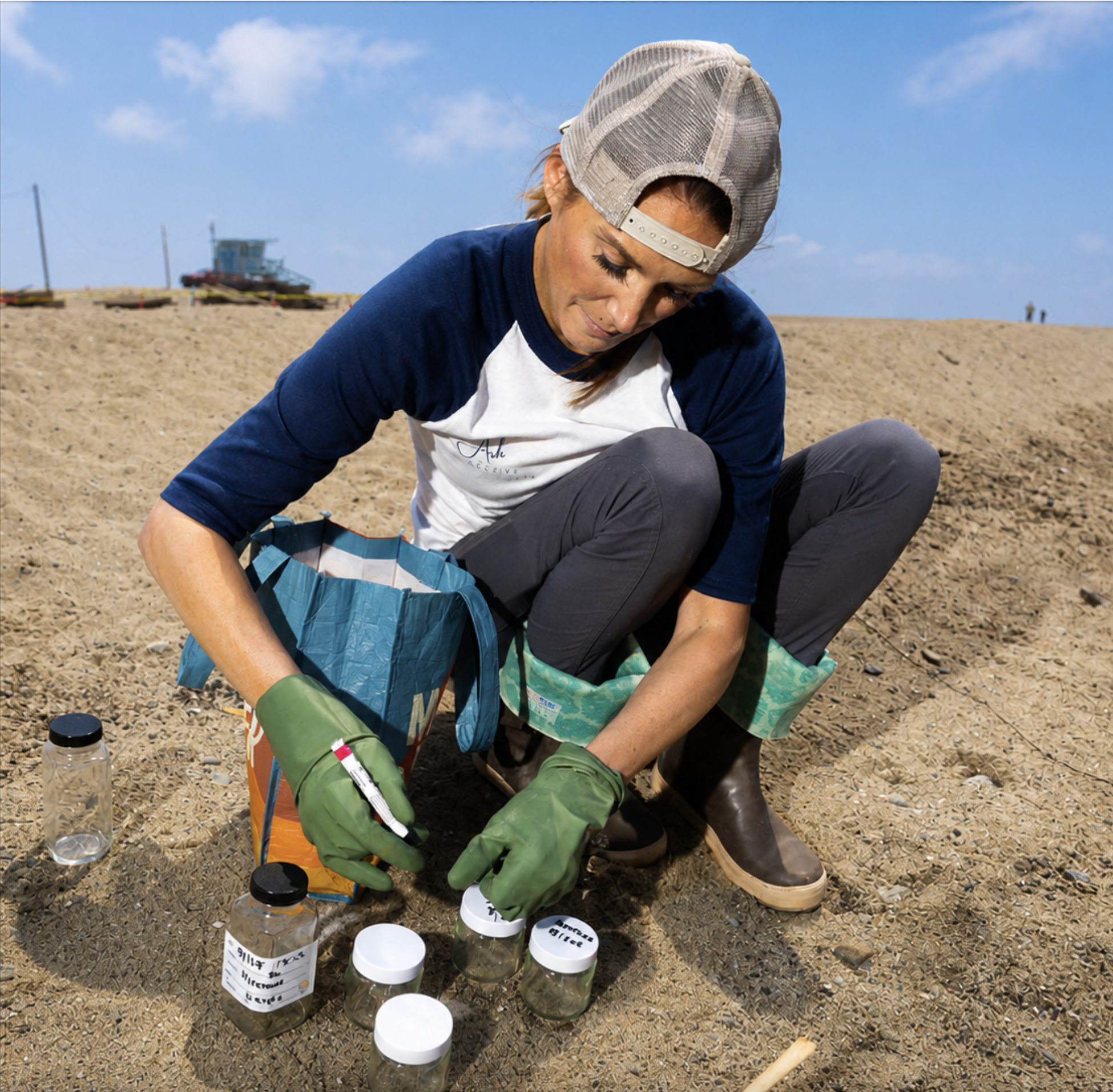
Ashley Oelsen gathering sand samples for testing.
In addition, as the months passed, government and organizational testing found that the amount of contamination decreased, which further indicated to her that the original high levels were not background levels, she said. (Heal the Bay’s testing is available at this link, while L.A. County’s reports are here.)
Because testing is so expensive, she hasn’t been able to test all of her sand samples, said Oelsen, who has an earth and environmental science degree from U. Penn. However, she has continued to record her observations of the beach and its wildlife.
Her observations, the worrisome test results, and the lack of adequate government action to protect the coastline in the weeks and months after the fire have ignited her desire to fight for local beaches and waterways.
Last year, she formed the Coastal Alliance, which unites organizations and residents who wish to advocate for the state’s ocean water and beaches. Surfing associations, whose members are often the first to notice changes in the ocean and beaches, environmental leaders, grassroots organizations, scientists, media producers, and coastal residents have joined her effort to protect and restore the coast.
In January and February last year, Oelsen began her advocacy by speaking at L.A. City Council meetings, writing letters to officials, and organizing community outreach. Only a month after the fire, Oelsen and many concerned residents united at a Feb. 9 Protect Will Rogers Protest.
“That was one of the hopeful moments in such a dark time,” Oelsen said. “I never want to forget that so many people lost so much from this devastating fire. That people found the bandwidth and emotional availability to come out and speak was a really beautiful moment.”
Unfortunately, Oelsen said there were also many missed opportunities to reduce the amounts of debris that polluted the ocean in the months after the fire, including burned oceanfront properties that were not cleared for months. Sand berms were also initially installed to keep debris out of the water, then bulldozers made a pathway through the berms so the debris could flow into the water where it broke down into microdebris.
Since then, government officials and Heal the Bay have tried to estimate safe levels of heavy metals and other pollutants in the ocean, but the estimates were created after this disaster, Oelsen said. She still receives questions from concerned parents who are unsure whether the water is safe for their babies or teen surfers, and she doesn’t have clear answers to provide.
“We don’t know if the levels are appropriate, and we don’t know what the cumulative effect is,” said Oelsen, who has a two-year-old son with her husband, Shaun Rosenberg. “Even in the best-case scenario, even if the contamination is harmless, it’s just underneath the surface. We see it…. Even if it is benign, it’s still not something I want my son’s developing lungs to ingest and swim in.”
A big part of her goal in forming the Coastal Alliance was to prevent similar missed opportunities for cleanup during future disasters. She and her partner organizations intend to create an action plan for future disasters and accidents that should better protect coastal waters.
“In an emergency or natural disaster, what should our response be?,” Oelsen said. “How can we be more prepared for the next time?”
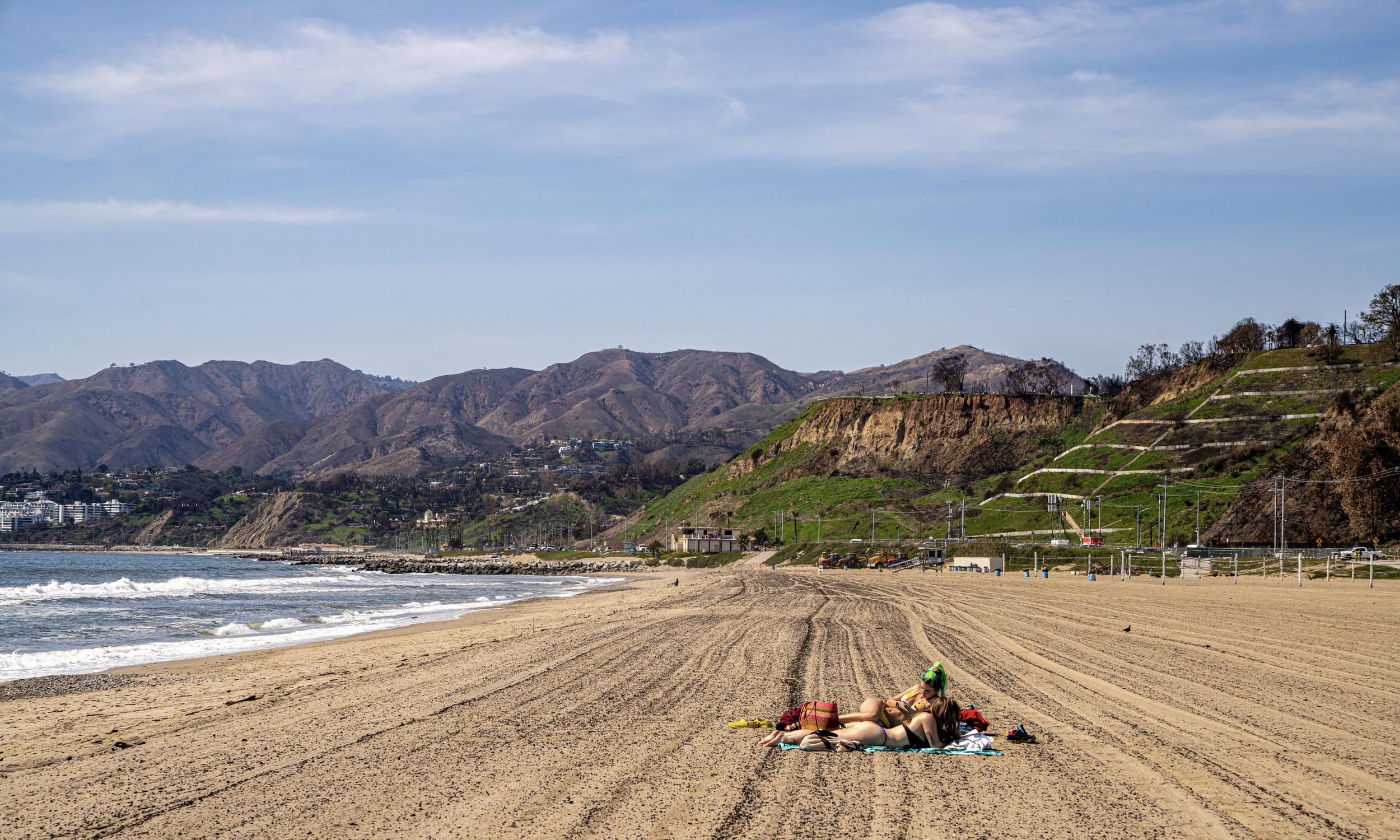
Will Rogers State Beach
In addition, the organization addresses issues that pop up, such as Calif. Assembly Bill 1740, which, if passed, would allow the development of certain coastline properties in Santa Monica without a permit from the California Coastal Commission, the agency charged with protecting beaches and coastal waters.
The Santa Monica Bay also faces pervasive environmental issues, including 1) an inadequate storm drain system; 2) plastic pollution; and 3) the loss of biodiversity, Oelsen said. The first two problems are areas where the public’s actions can be particularly impactful.
For example, Hyperion Water Reclamation Plant treats 250-300 million gallons of wastewater per day, but only 10-12 percent of this sewage is fully treated and recycled via either the West Basin Municipal Water District or Hyperion’s Advanced Water Purification Facility. The remainder undergoes preliminary screening, primary settling to remove solids, and a biological treatment with microorganisms to consume and break down the dissolved waste. before being discharged into the ocean five miles from shore at a depth of 190 feet, according to Hyperion representatives. Hyperion’s eventual goal is to treat 100% of its water for beneficial reuse.
Oelsen said that intense public complaints about the issue could yield government action to better clean this water before releasing it into Santa Monica Bay.
“Santa Monica Pier is consistently rated the worst and most polluted ocean water in the whole country,” Oelsen said. “There are changes to the infrastructure of our storm drains that could capture a lot of the debris for removal…. Emails and calls to elected leaders do make a difference. That’s the best way that people can feel, ‘This is what I can do and have a result.’”
Plastics are another way the oceans are contaminated. To address this problem, Oelsen seeks to reduce the single-use plastic dependency of beachgoers and residents.
“By 2050, there will be more plastic in the ocean than fish pound for pound; that’s a staggering statistic,” Oelsen said. “Using a plastic fork and carrying a water bottle are inconvenient. Convenience is the biggest threat. Plastic is so convenient.”
Oelsen, who completed a Univ. of Pennsylvania graduate program in Earth and Environmental Science that combined studies with the Wharton School of Business, also argues that the focus of the “Reduce, reuse, recycle” campaign should not be on recycling but instead on both a reduction in plastic consumption and an increase in the reuse of plastics, since much of the plastic that is presented as recyclable is unable to be recycled due to infrastructure issues.
The third issue—loss of biodiversity—is particularly hard to combat, but the reforestation of the oceans with kelp and sea grass could both aid in the cleanup of ocean water and also provide better habitat for its creatures. In addition, Oelsen recommends considering how the beaches are groomed, since that grooming can make beaches inhospitable to nesting birds like the snowy plover.
Oelsen asks residents to visit thecoastalalliance.org if they would like to donate or participate in the Coastal Alliance’s advocacy.
“I hope that through education, people can feel a sense of hope and be empowered and not be overwhelmed by these environmental issues,” Oelsen said. “Everybody still has a little piece to play, and I hope people find the ability to invest in a little bit of education.”
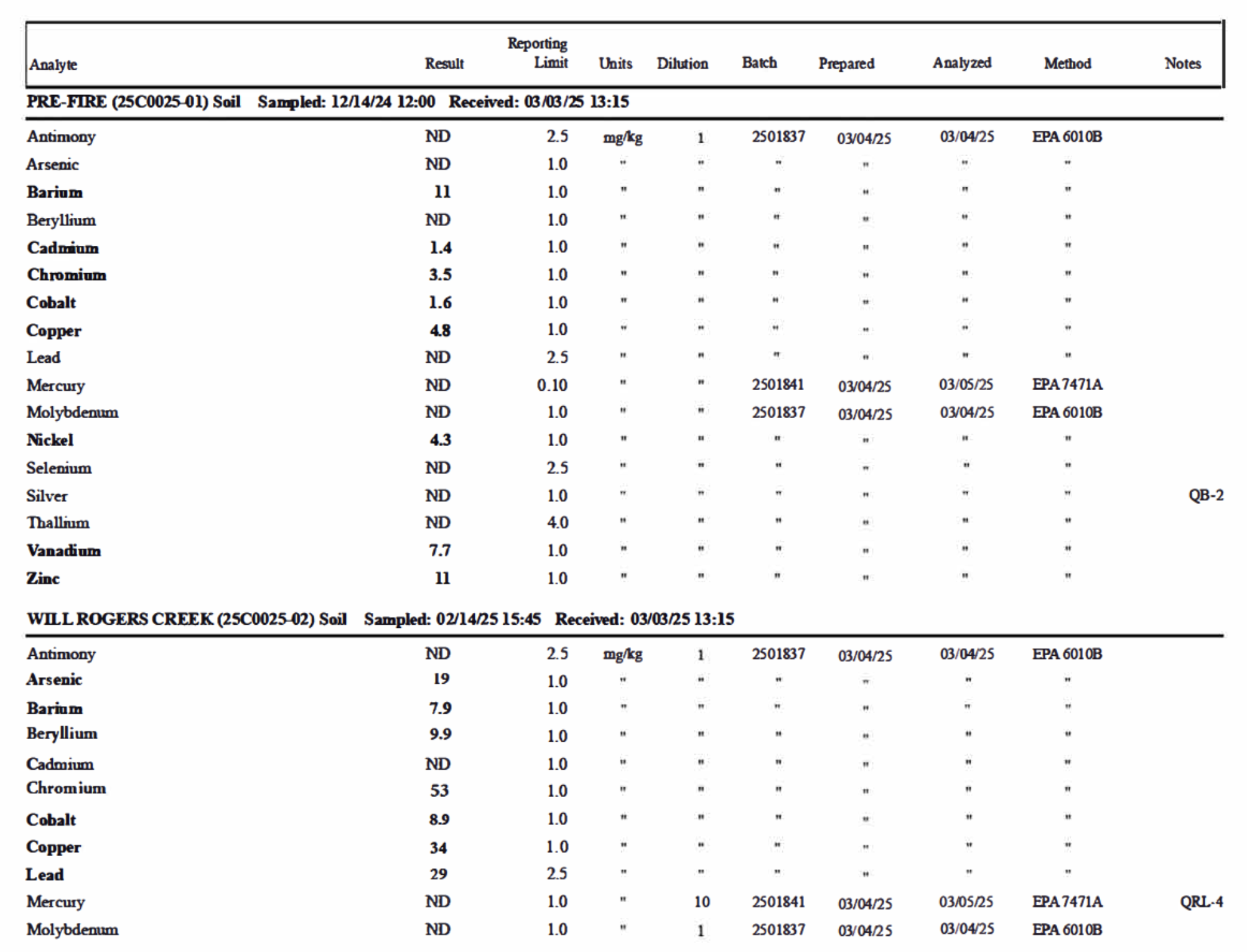
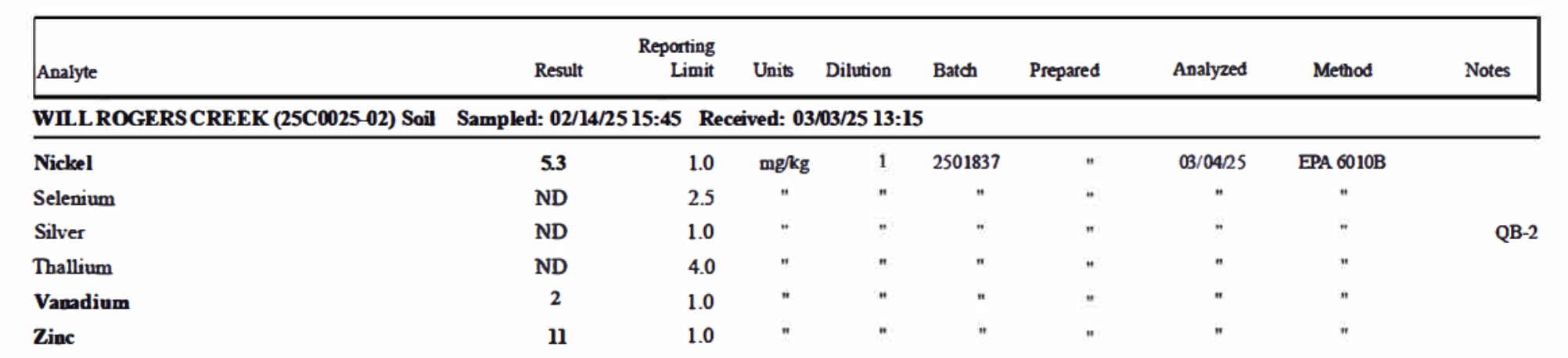
Ashley Oelsen’s heavy meta pre- and post-firel testing results for the base of Santa Canyon at the storm drain. ND means not detected, and the numbers are in parts per million.
